Camellia taliensis
Camellia taliensis (W. W. Sm.) Melch.
Description
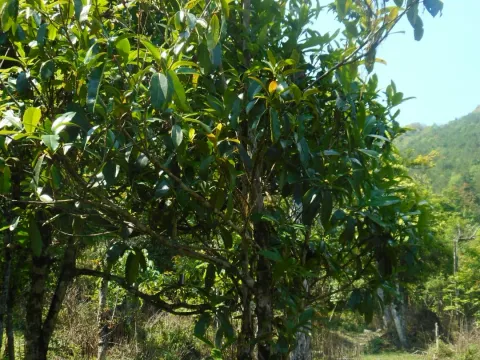
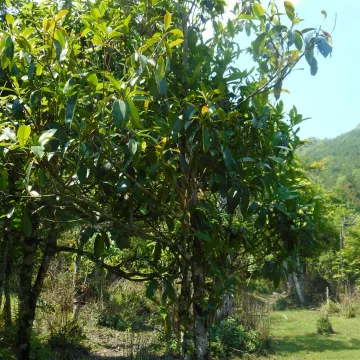
Camellia taliensis is a perennial woody plant belonging to the Theaceae family, recognized primarily for its role as a tea-producing species. It is taxonomically related to the common tea plant (Camellia sinensis) but possesses distinct morphological traits, including larger leaf structures and specific chemical profiles that make it valuable for specialized tea processing.
The plant originates from the high-altitude, humid subtropical regions of Southwestern China, particularly Yunnan province, and extends into parts of Myanmar and Laos. It thrives in montane ecosystems, typically occupying forested slopes at elevations ranging from 1,000 to 2,500 meters, where the climate remains temperate with consistent rainfall throughout the year.
Botanically, it exhibits a robust growth habit, often growing into a small tree if left unpruned. Its leaves are broad, leathery, and dark green, while its flowers are typically white and showy, appearing in the leaf axils. The plant is adapted to nutrient-rich forest soils and has evolved to maximize photosynthesis under the filtered light conditions of its native canopy.
For successful cultivation, Camellia taliensis requires acidic, well-draining soil with a high organic content. The plant is sensitive to frost and extreme heat, making it suitable only for specific climatic zones. Agricultural practices involve regular pruning to manage height and encourage lateral branching, as well as providing consistent irrigation to maintain soil moisture without causing waterlogging.
Commercially, it is prized for the production of artisanal tea varieties, particularly those that require long-term fermentation. As with other members of the Camellia genus, producers must manage potential threats to ensure yield and quality. Key aspects of plant health management include:
- Regular monitoring for fungal pathogens such as leaf blight.
- Management of common tea pests like tea aphids and mites.
- Implementation of shade management to protect young foliage.
- Soil pH adjustment to maintain levels between 4.5 and 5.5.
Photo gallery