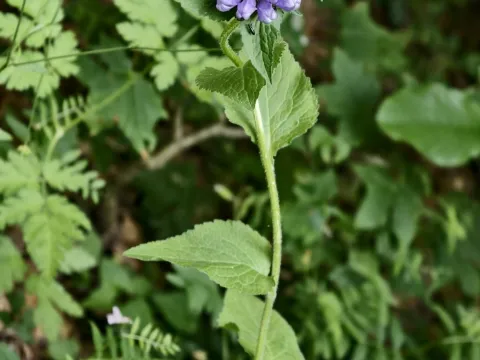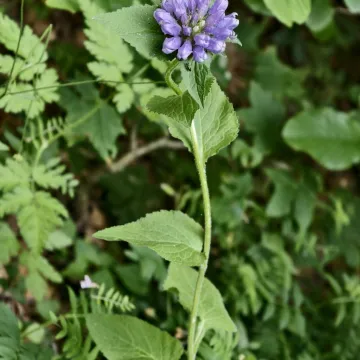

Leafy bellflower
Campanula foliosa
Description
Leafy bellflower (lat. Campanula foliosa) is a perennial herbaceous plant belonging to the Campanulaceae family. This culture is highly regarded in horticulture for its ornamental value, compact growth, and ability to thrive in various temperate environments, making it a reliable choice for decorative planting.
The species originates from mountain ranges in Europe and the Caucasus. Naturally found in alpine and subalpine meadows, the plant has developed robust survival mechanisms, allowing it to adapt well to garden conditions. As a cultivated crop, it is prized for its longevity and its structural role in perennial garden displays.
Botanically, Campanula foliosa is characterized by its upright stems densely covered with foliage, which serves as the basis for its specific name. The flowers are clustered at the tips of the stems, forming dense heads. The petals typically range from pale blue to deep violet, creating a visually striking display throughout the flowering season during summer months.
The agricultural requirements for this crop focus on soil drainage and fertility. It prefers well-drained, nutrient-rich soil with a neutral to slightly alkaline pH. While it thrives in full sun, it can tolerate partial shade, provided the soil moisture is consistent but not excessive. Proper aeration of the soil is essential for the healthy development of the root system.
- Ensuring excellent drainage to prevent root rot.
- Application of organic matter for soil enrichment.
- Removal of spent blossoms to encourage secondary growth.
- Integrated pest management against slugs and aphids.
The primary use of the leafy bellflower is in ornamental landscaping. It is an ideal component for alpine rock gardens, mixed herbaceous borders, and naturalistic planting schemes. Due to its hardiness and relative lack of maintenance requirements, it remains a popular choice for sustainable gardening practices that emphasize low-input ornamental crop management.
Photo gallery