Tongue-leaved bellflower
Campanula lingulata
Description
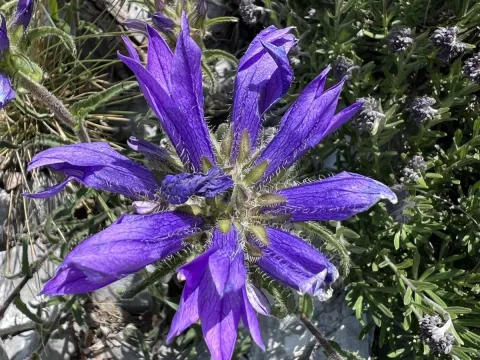
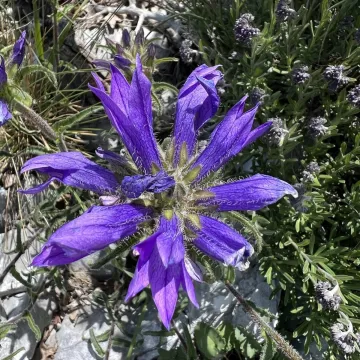
Campanula lingulata, commonly known as the tongue-leaved bellflower, is a biennial herbaceous plant belonging to the Campanulaceae family. Native to the regions of Southeastern Europe, this species is well-adapted to rocky terrains and open meadow conditions. It is a highly regarded ornamental plant prized for its unique, dense flower clusters that provide a distinct architectural shape to garden beds.
The botanical structure of the plant consists of a basal rosette of hirsute leaves and erect, sturdy stems that typically reach heights between 30 and 60 centimeters. The plant produces small, violet-blue, funnel-shaped flowers gathered into compact, head-like inflorescences. This characteristic clustering is the inspiration for its specific epithet, suggesting the shape of a tongue.
Regarding climate and soil requirements, this species thrives in full sun exposure and requires well-drained, nutrient-rich soils with a neutral pH. It is sensitive to waterlogged conditions, which can lead to root rot; therefore, providing a sandy or gritty substrate is beneficial for its longevity. In terms of temperature, it is well-suited to temperate climates and can withstand moderate frost during its winter dormant phase.
Cultivation practices for Campanula lingulata are relatively straightforward, focusing on proper sowing and moisture management. Seeds should be sown in early spring in well-prepared seedbeds. Regular weeding and the application of balanced, low-nitrogen fertilizers are recommended during the growing season to ensure robust stem development and optimal flower production.
- Requires full sun to partial shade.
- Prefers well-drained, slightly alkaline soil.
- Moderate watering during the dry season.
- Susceptible to slug damage in early growth stages.
Common health issues involve fungal infections such as powdery mildew, especially in humid or poorly ventilated environments. To prevent infestations, it is advisable to maintain proper spacing between individual plants. Aside from minor pest issues involving gastropods, the plant remains a relatively low-maintenance option for xeriscaping or traditional perennial borders.
Photo gallery