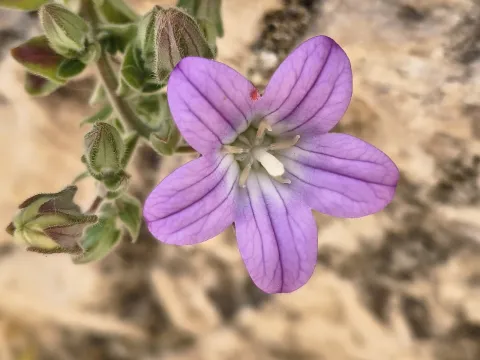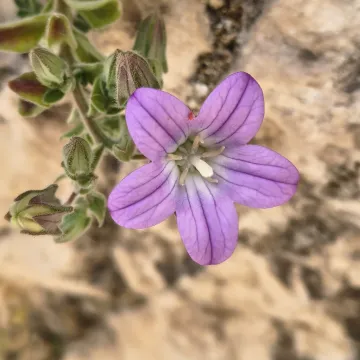

Campanula mollis
Campanula mollis
Description
Campanula mollis, commonly known as the soft bellflower, is a perennial herbaceous plant belonging to the Campanulaceae family. It is highly esteemed in horticulture for its compact habit, velvety foliage, and elegant, bell-shaped flowers that bloom in late spring and early summer, making it a favorite for collectors of alpine flora.
This species is native to the Mediterranean region, specifically found in limestone crevices and rocky slopes in Spain and Italy. Its evolution in such specific habitats has shaped its physiological requirements: it thrives in well-drained, nutrient-poor, yet mineral-rich substrates that mimic its natural alpine environment.
Botanically, Campanula mollis is characterized by its densely pubescent (hairy) leaves which give it a soft, tactile texture. The plant forms low, cushion-like rosettes, from which delicate stems emerge, bearing numerous small, light blue-to-violet blossoms. Its growth rate is moderate, and it maintains a small footprint in any garden setting.
Agrotechnical requirements for Campanula mollis focus primarily on preventing root rot. The soil must be gritty and alkaline, ensuring water flows away quickly from the crown. It prefers bright, indirect light or morning sun with afternoon shade, as the delicate foliage can scorch under intense heat. During winter, it requires protection from excessive moisture and freezing winds.
- Excellent soil drainage is mandatory
- Neutral to slightly alkaline substrate
- Protection from winter humidity
- Moderate watering during the blooming phase
- Strategic placement to avoid intense noon sun
In terms of usage, Campanula mollis is a staple for rock gardens, stone wall pockets, and trough planting. Common pests include snails and slugs, which are particularly attracted to the soft leaves. Diseases are largely limited to root and crown rot, which occur only when the plant is subjected to poor aeration or stagnant moisture in the substrate.
Photo gallery