Creeping bellflower
Campanula rapunculoides
Description
The creeping bellflower (Campanula rapunculoides) is a herbaceous perennial plant belonging to the Campanulaceae family. While often viewed as an aggressive garden plant or weed, it has historical significance as a cultivated root vegetable and medicinal herb in various European regions.
Originating from Eurasia, this species has naturalized across much of the temperate world. Its ability to thrive in diverse environments, from forest margins to cultivated fields, highlights its robustness. The plant is characterized by its significant invasive potential due to a complex system of underground rhizomes.
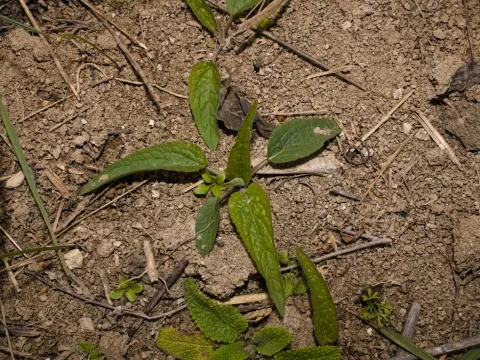
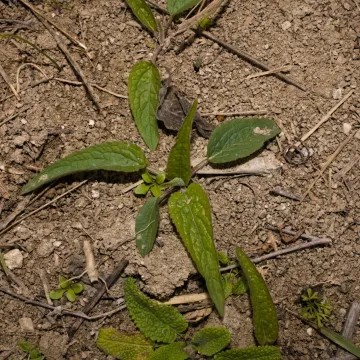
Botanically, the creeping bellflower features upright stems reaching up to one meter in height, adorned with heart-shaped basal leaves and serrated upper foliage. Its defining feature is the one-sided raceme of bell-shaped, violet-blue flowers, which bloom throughout the summer months, providing significant nectar for pollinators.
In terms of cultivation, the plant is remarkably hardy. It prefers well-drained, fertile, and moderately moist soils but can tolerate various pH levels. It grows effectively in both full sun and partial shade. Agronomic management requires careful control of its root system, which can rapidly expand, potentially competing with other crop species in the immediate vicinity.
Economically and historically, both the leaves and the fleshy, turnip-like roots have been consumed as food, earning the plant its specific name. It also possesses properties traditionally utilized in herbal medicine to treat minor inflammatory conditions. While generally resilient, the plant can be susceptible to powdery mildew and aphid infestations if planted in overly dense or poorly ventilated conditions.
Despite its reputation as a difficult weed to eradicate in some jurisdictions, sustainable management allows for controlled harvests of its edible components. Integrating the creeping bellflower into managed agricultural or permaculture systems requires an understanding of its rapid growth cycle and preference for organic-rich substrates.
Photo gallery