Rhomboid bellflower
Campanula rhomboidalis
Description
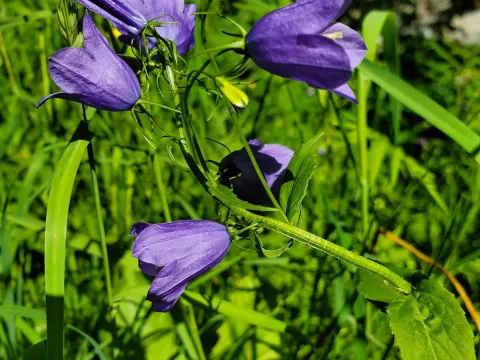
The rhomboid bellflower (Campanula rhomboidalis) is a perennial herbaceous plant belonging to the Campanulaceae family. Widely recognized for its aesthetic appeal, this plant is an important culture in the ornamental industry, valued for its delicate flowers and ability to thrive in temperate climates.
Originating from the mountainous regions of Europe, specifically the Alps and Pyrenees, this species has evolved to inhabit subalpine meadows and woodland edges. Its natural habitat is characterized by cool temperatures and varying soil quality, which has contributed to its robust and resilient nature when introduced into garden cultivation.
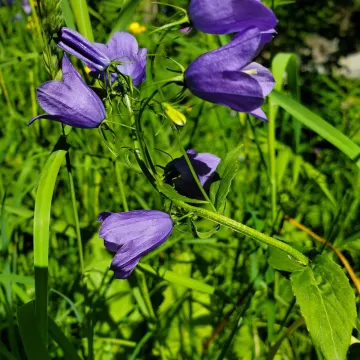
Botanically, Campanula rhomboidalis is defined by its upright stems, typically reaching 50–60 cm, and distinct rhomboid-shaped, serrated leaves. The flowers are bell-shaped, emerging in loose, elegant clusters with a striking violet-blue hue. These features make it a preferred choice for mass plantings and border displays in traditional and modern landscapes.
Successful cultivation requires well-drained, nutrient-rich soil and a position in full sun to partial shade. Key agricultural practices include consistent irrigation, especially during the peak summer heat, and the application of balanced fertilizers in early spring. It is essential to provide adequate spacing to ensure good air circulation, which helps maintain plant vigor.
The rhomboid bellflower is primarily used for landscaping and as an ornamental component in perennial beds. While generally hardy, the plant can be susceptible to pests such as slugs and snails, which target tender foliage. Additionally, preventing fungal infections, like powdery mildew, requires maintaining proper soil moisture balance and ensuring the garden area is free from stagnant water.
Photo gallery