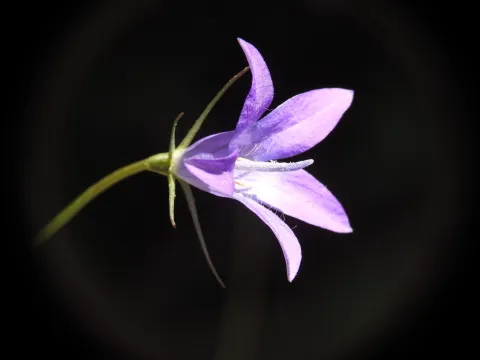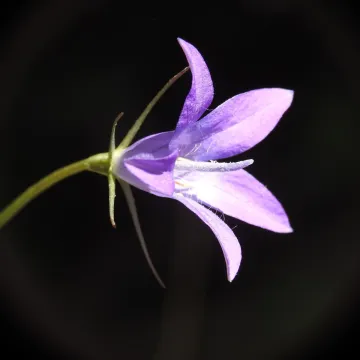
Spoon-leaved bellflower
Campanula spatulata
Description
The spoon-leaved bellflower (Campanula spatulata) is a perennial herbaceous plant belonging to the large Campanulaceae family. It is a highly valued ornamental species, recognized by gardeners for its delicate, bell-shaped flowers and its ability to thrive in specialized garden settings such as rockeries and alpine landscapes.
The native distribution area of this species encompasses parts of the Balkan Peninsula and Southeastern Europe. It naturally occurs in mountainous environments, typically found on rocky slopes and grassy meadows. These origins suggest that the plant is best suited for environments that mimic high-drainage, well-aerated soil conditions found in its natural habitat.
Botanically, the species is defined by its characteristic spatulate (spoon-shaped) basal leaves, which form neat rosettes close to the ground. The inflorescences emerge on slender stems, producing vibrant blue to violet flowers that bloom throughout the peak summer months, providing significant ornamental value to garden borders.
Cultivation requirements for Campanula spatulata prioritize well-drained, nutrient-moderate soil and a sunny or partially shaded location. Because the species originates from mountainous regions, it struggles in waterlogged soil. Proper soil structure is essential for root health, and supplementary irrigation should be managed carefully during dry, hot weather to prevent wilting.
- Excellent choice for rock gardens and crevices.
- Requires full sun to partial shade for optimal growth.
- Thrives in neutral to slightly alkaline, well-draining soil.
- Easily propagated via seeds or division in early spring.
In terms of plant health, the species is relatively robust but can be susceptible to common garden pests such as slugs and snails, which feed on the foliage. Additionally, root rot remains the primary threat, often caused by stagnant moisture. Maintaining clean, weed-free surroundings and ensuring adequate drainage can effectively mitigate these common agricultural issues.
Photo gallery