Arctic bellflower
Campanula uniflora
Description
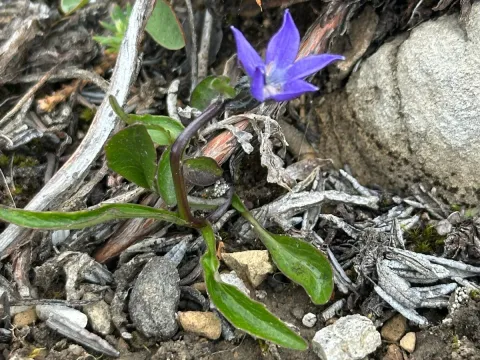
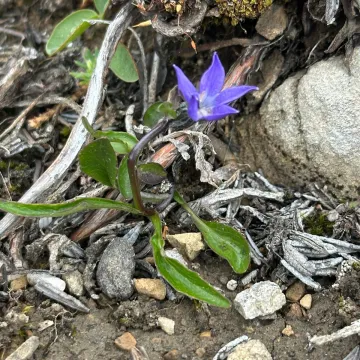
The Arctic bellflower (Campanula uniflora) is a distinctive perennial herb belonging to the Campanulaceae family. It is a highly specialized plant species, adapted to survival in arctic and alpine tundra environments, where temperatures are consistently low and the growing season is significantly restricted by climate conditions.
Native to the circumpolar regions, including northern Scandinavia, Greenland, the Canadian Arctic, and parts of Alaska and Siberia, this plant thrives in exposed, rocky locations. Its natural habitat is characterized by thin, nutrient-poor soils and high wind exposure, forcing the plant to remain low to the ground for protection.
Botanically, the plant is distinguished by a solitary, nodding bell-shaped flower with deep blue to violet petals. Its foliage is sparse, forming a small rosette at the base, which allows the plant to conserve energy and nutrients throughout the short reproductive cycle. The entire structure rarely exceeds 10 centimeters in height, reflecting an adaptation to permafrost environments.
In terms of cultivation and agrotechnics, Campanula uniflora is considered a challenging species. It requires mineral-rich, extremely well-draining soil with a neutral to slightly acidic pH. Gardeners aiming to maintain this species must provide cool root temperatures and excellent air circulation, as the plant is highly susceptible to heat stress and fungal rot in humid or enclosed environments.
While the Arctic bellflower holds no major agricultural or industrial value, it is highly prized by alpine plant enthusiasts and botanists for its unique ecological adaptation and aesthetic delicacy in rock gardens. The main maintenance challenges include protecting the plant from excessive moisture during dormancy and monitoring for damage by common garden pests such as slugs, which can quickly consume its delicate succulent leaves.
Photo gallery