Ylang-ylang
Cananga odorata (Lam.) Hook. f. & Thomson
Description
Ylang-ylang (Cananga odorata) is a fast-growing tropical tree belonging to the Annonaceae family. Known primarily for its highly fragrant flowers, the plant is a critical botanical resource for the global fragrance industry. In cultivation, it is typically managed as a low-stature tree through heavy pruning to ensure efficient labor during the flower harvesting process.
The species is native to tropical regions of Southeast Asia, including Indonesia, the Philippines, and parts of the Pacific islands. Its cultivation has expanded to other tropical zones, specifically the Comoros Islands and Madagascar, which currently lead the market in producing Ylang-ylang essential oil, a key ingredient in luxury perfumes.
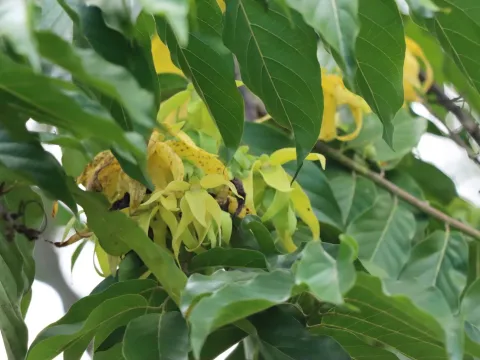
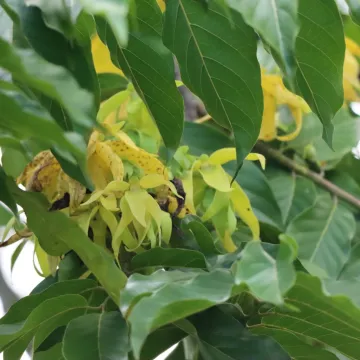
Botanically, the tree features glossy, ovate leaves and distinctive, pendulous flowers with long, strap-like petals. These flowers transition from a pale green to a deep yellow color as they mature, which coincides with their peak oil content. The fruit consists of clusters of small, green berries that ripen to black, containing multiple seeds.
Successful cultivation requires a frost-free, humid environment with consistent temperatures between 20°C and 30°C. The soil should be fertile, acidic to neutral, and possess excellent drainage to prevent root rot. Consistent rainfall or irrigation is mandatory, as the tree has high water demands, though it cannot tolerate stagnant water around its roots.
Commercial production focuses on the hydrodistillation of freshly picked flowers to extract essential oil. Producers must monitor for common pests such as mealybugs and aphids, which can compromise flower quality. Regular pruning and maintenance are the cornerstones of agro-management, ensuring high yields and long-term tree productivity.
Photo gallery