Canella winterana
Canella winterana
Description
Canella winterana, commonly known as wild cinnamon, is a prominent member of the Canellaceae family. This evergreen tropical tree is traditionally cultivated for its aromatic bark, which has been utilized for centuries in both culinary and medicinal applications. It is a slow-growing, perennial plant that thrives in specific tropical ecosystems.
The native range of this species extends across the Caribbean, the Bahamas, and parts of Southern Florida. It naturally occupies coastal thickets and forests that are characterized by limestone-derived soils. Because of its tropical origins, it requires a frost-free environment and consistent humidity, making it unsuitable for cultivation in temperate climates without controlled greenhouse conditions.
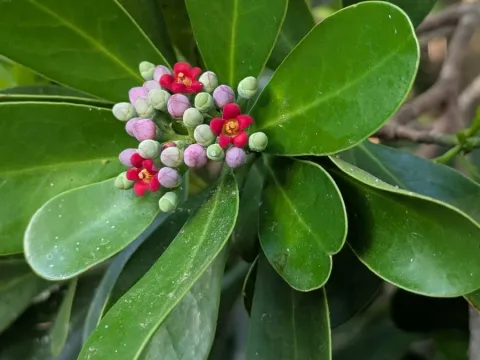
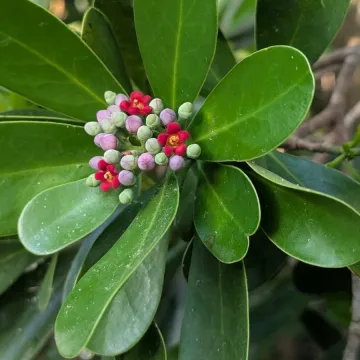
Botanically, the tree displays glossy, dark green leaves and clusters of small, fragrant, star-shaped flowers with reddish petals. The fruit is a spherical berry that matures to a dark purple or black color. These botanical features contribute to its identification as an aromatic woody plant that stores essential oils primarily within its inner bark layers.
Agricultural practices for Canella winterana focus on maintaining high-quality soil aeration and pH balance. Since the species naturally grows on limestone, it prefers alkaline soils with excellent drainage. Cultivators must implement a careful irrigation schedule; excessive water retention in the soil frequently leads to root rot, which is a major constraint for commercial plantations.
Economically, the harvest of bark is the primary use of this crop. The bark contains compounds such as eugenol and other aromatic resins, utilized in the food industry as a flavoring agent and in traditional medicine.
- Common pests include scale insects and aphids.
- Diseases are often limited to fungal issues, specifically root and crown rots.
- Optimal growth requires partial shade in juvenile stages.
Photo gallery