Capparis sepiaria
Capparis sepiaria
Description
Capparis sepiaria is a perennial evergreen shrub belonging to the Capparaceae family. Renowned for its resilience and adaptability, this species is well-suited to challenging environments, making it a subject of interest for agriculture in arid and semi-arid regions across the globe.
The native range of Capparis sepiaria includes tropical and subtropical Asia, with significant populations found in India and neighboring regions. The plant thrives in open, sun-drenched habitats, often establishing itself in dry, rocky terrain where it serves as a robust component of the local xerophytic vegetation.
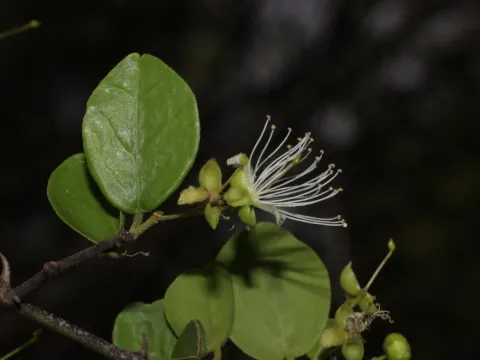
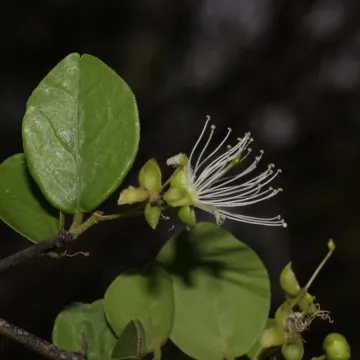
From a botanical perspective, the plant is characterized by a dense, sprawling habit with numerous branches armed with curved thorns. Its leaves are small, leathery, and designed to conserve moisture. During the flowering season, it produces striking white blossoms with prominent stamens, which are not only aesthetically pleasing but also attract various pollinators.
Cultivation of this species requires minimal agricultural input. It flourishes in well-drained, sandy, or rocky soils and requires full sun exposure to reach its maximum productivity. The primary agrotechnical challenges involve managing its aggressive growth habit and ensuring the soil remains well-drained, as the plant is highly sensitive to waterlogged conditions that can cause root decay.
The economic and practical utility of Capparis sepiaria is multifaceted. It is widely recognized for its medicinal properties, particularly the use of roots and bark in traditional therapies. Furthermore, due to its dense, thorn-covered structure, it is frequently utilized as a living fence, providing an eco-friendly and effective solution for property protection and soil erosion control.
- Exceptional tolerance to heat and long-term drought.
- Ability to thrive in nutrient-poor and rocky soil types.
- Effective use as a natural barrier or living hedge.
- Contains bioactive compounds useful in pharmacology.
- Low maintenance requirements for large-scale management.
Photo gallery