Ceylon caper
Capparis zeylanica
Description
Ceylon caper (scientific name Capparis zeylanica) is a perennial shrub belonging to the Capparaceae family. Often manifesting as a scrambling shrub or a woody climber, this plant is well-regarded for its resilience and unique biochemical profile. It plays a significant role in its native ecosystems and has long been utilized in traditional practices across various Asian cultures.
The plant originates from the tropical regions of South and Southeast Asia, with a native range extending across India, Sri Lanka, and Indochina. It thrives in arid and semi-arid climates, demonstrating an impressive capacity to withstand heat and water scarcity. Its ability to colonize harsh environments makes it an interesting subject for sustainable agriculture and land reclamation projects.
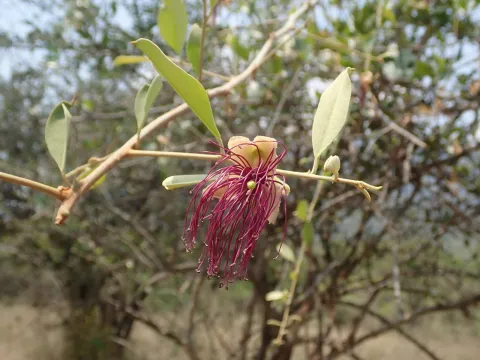
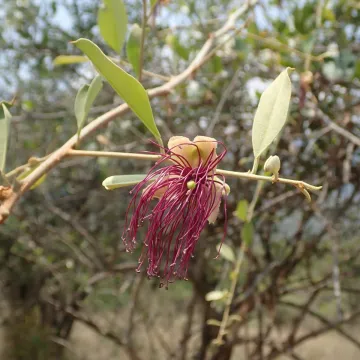
Botanically, the plant is characterized by its stiff, woody stems covered in sharp spines, and simple, leathery, alternate leaves that help minimize transpiration. The flowers are notable for their showy appearance, typically featuring four white or pale pink petals and prominent, long-reaching stamens. Following pollination, the plant produces fleshy, berry-like fruits containing multiple seeds.
Cultivation of Capparis zeylanica requires specific environmental conditions, primarily focusing on well-draining soils. It performs best in sandy, gravelly, or rocky soil types with a neutral to alkaline pH level. As a heliophilous species, it demands full exposure to sunlight. Excessive irrigation is generally detrimental, as the root system is highly prone to fungal pathogens in waterlogged soil conditions.
The agricultural and economic utility of this species includes:
- The extraction of secondary metabolites for the pharmaceutical and nutraceutical industries.
- Utilizing the plant as a natural vegetative cover to stabilize soils in degraded, arid terrains.
Photo gallery