Siberian peashrub
Caragana arborescens Lam.
Description
Siberian peashrub (Caragana arborescens) is a perennial deciduous shrub belonging to the Fabaceae family. Known for its remarkable toughness, it is a key plant in sustainable agroforestry systems, valued for its ability to thrive in challenging climates and poor soil conditions where many other woody crops fail.
The native range of this species extends across Siberia, Mongolia, and parts of Kazakhstan. It has been widely introduced across North America and Europe as an ornamental and functional plant, particularly valued for its role in windbreaks, shelterbelts, and snow control barriers in agricultural fields due to its dense branching structure.
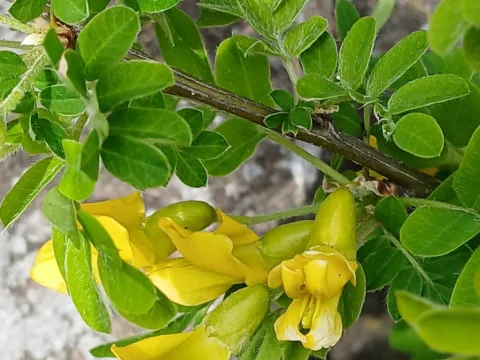
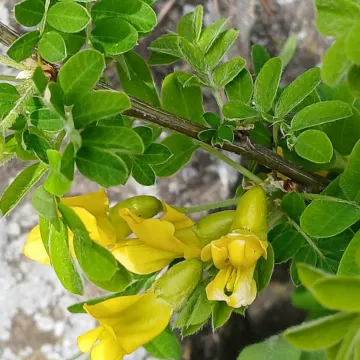
Botanically, the plant is characterized by pinnate leaves and bright yellow, pea-like flowers that bloom in late spring. The plant forms a symbiotic relationship with nitrogen-fixing bacteria, which allows it to thrive in nutrient-poor soils and significantly improve soil nitrogen levels over time, acting as a natural green fertilizer in plantation settings.
Regarding agrotechnical requirements, the Siberian peashrub is exceptionally drought-tolerant once established and performs well in various soil types, ranging from sandy loams to rocky ground. It is highly resistant to cold temperatures and urban pollution. Maintenance is minimal, requiring only periodic pruning to maintain shape and density for hedges.
The shrub is utilized for erosion control, wildlife habitat improvement, and as a valuable early-season forage source for bees. While generally pest-resistant, it can occasionally be affected by specific foliage-feeding insects or fungal leaf spots. Integrated pest management strategies, such as maintaining air circulation through proper pruning, are effective in keeping these issues under control.
Photo gallery