Carambola
Averrhoa carambola L.
Description
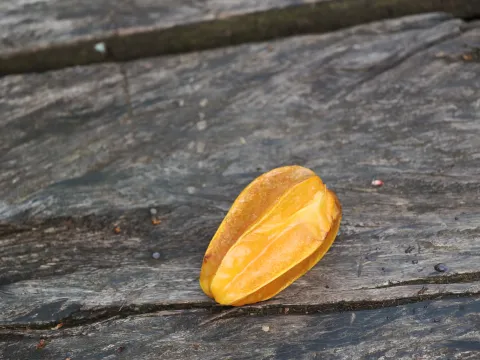
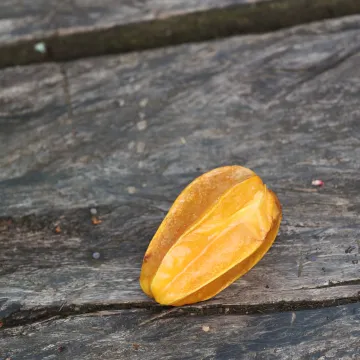
Carambola (Averrhoa carambola L.), commonly known as star fruit, is a slow-growing evergreen tree belonging to the Oxalidaceae family. The tree is recognized for its distinctive, star-shaped fruit that emerges when sliced crosswise. It typically grows to a height of 5 to 10 meters and features a dense, bushy canopy of pinnate leaves.
The species originated in the tropical regions of Southeast Asia, including parts of India and Indonesia. Today, it is commercially cultivated across various tropical climates worldwide, including regions in South America, the Caribbean, and Florida. The crop thrives in environments where frost is absent, as the plant is highly sensitive to cold temperatures.
Botanically, the tree produces small, fragrant, pinkish-purple flowers in clusters. The leaves are sensitive to touch and light, demonstrating a folding response known as nyctinasty. The fruit starts as a green berry, turning a vibrant yellow or golden-orange upon ripening, with a texture ranging from crunchy to juicy depending on the specific cultivar.
For optimal agronomic performance, carambola requires well-draining soil with a pH ranging from 5.5 to 6.5. It is essential to manage water irrigation carefully, as the trees are susceptible to root rot in waterlogged conditions. Fertilizer applications should focus on balanced NPK ratios with added micronutrients, particularly magnesium and boron, to ensure healthy fruit set and tree development.
Regarding health and protection, common pests include fruit flies, mites, and various scales that infest the foliage. Anthracnose and various root rot fungi are the most prevalent diseases impacting crop yield. Effective management involves regular pruning to improve air circulation within the canopy and the use of integrated pest management (IPM) strategies to maintain tree vigor.
Photo gallery