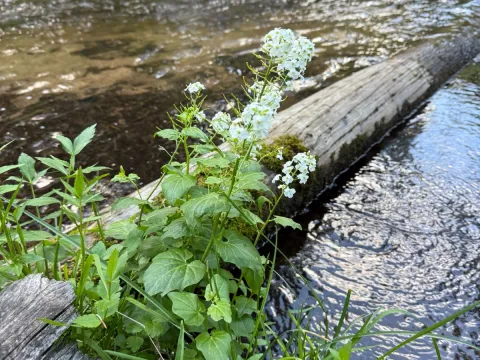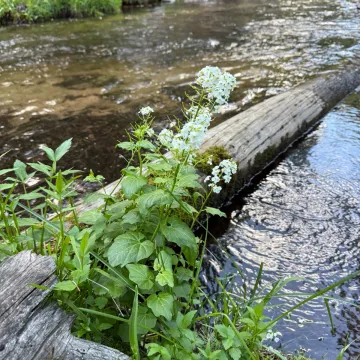

heartleaf bittercress
Cardamine cordifolia
Description
Heartleaf bittercress (Cardamine cordifolia) is a perennial herbaceous plant belonging to the Brassicaceae family. Naturally occurring in moist, shaded environments, this species is well-adapted to habitats near streams and in temperate forests where consistent soil moisture is a hallmark of the local ecosystem.
The plant is native to North America, primarily found in western mountain ranges. In modern agricultural and botanical contexts, it is cultivated for its potential medicinal properties and its utility as a ground-cover species in specialized nursery and farm settings that prioritize biodiversity and non-traditional crop production.
Botanically, it is characterized by erect stems and distinct heart-shaped leaves, from which the common name is derived. The plant produces small, delicate white flowers during the growing season. Its root system is fibrous and highly efficient at nutrient uptake in moist, humus-rich soil environments.
Cultivation requirements necessitate sites with high organic matter content, good drainage, and reliable water access. While the plant prefers shaded or semi-shaded areas, it requires adequate airflow to prevent fungal issues. Consistent moisture is the most critical factor for maintaining vigorous growth and health throughout the summer.
- Requires consistent soil moisture.
- Prefers partial shade conditions.
- Needs humus-rich, fertile soil.
- Susceptible to flea beetles.
Regarding its хозяйственное use, heartleaf bittercress is researched for its phytochemical profile, often associated with other members of the mustard family. Pests such as flea beetles can pose a significant challenge, while fungal pathogens may occur in overly stagnant water conditions, necessitating proper field management practices.
Photo gallery