Nine-leaved toothwort
Cardamine enneaphyllos
Description
Nine-leaved toothwort (Cardamine enneaphyllos) is a perennial herbaceous plant belonging to the Brassicaceae family. In agricultural and horticultural practices, this species is classified as a specialized shade-loving perennial, highly valued for its unique morphology and suitability for woodland garden environments.
The plant is native to the mountain forests of Central and Southern Europe. It naturally thrives in shaded, cool, and humid environments, typically found in beech and spruce forest ecosystems. Understanding its origin is essential for successful cultivation, as it requires mimicking the specific microclimate of the forest floor.
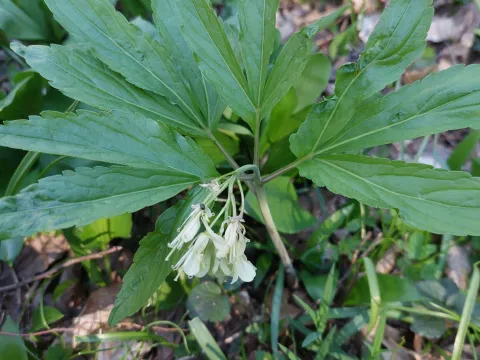
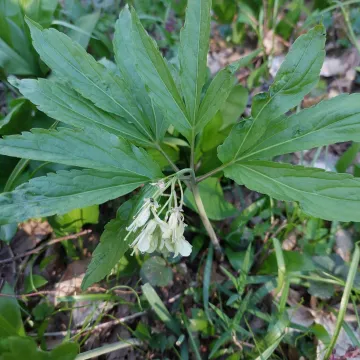
Botanically, the species is distinguished by its scaly rhizome and a distinct whorl of three ternate leaves on the stem. The flowers appear in spring, forming a nodding raceme with pale yellow petals. This early flowering cycle is a key characteristic that defines its role in spring forest succession.
Agricultural requirements focus on maintaining cool, moist, and humus-rich soil conditions. The culture is sensitive to drought and direct heat. Proper soil structure is vital; it must be well-drained yet moisture-retentive, with a slightly acidic to neutral pH balance, reflecting the nutrient-rich conditions of native forest soils.
In terms of management, the main focus is on pest control, particularly protecting young shoots from slugs and snails. The plant is relatively resistant to major fungal pathogens, provided that the air circulation remains adequate and the moisture levels do not lead to waterlogging. It is primarily used for ornamental woodland landscaping and biodiversity preservation.
Photo gallery