Carpetanian thistle
Carduus carpetanus
Description
The Carpetanian thistle (Carduus carpetanus) is a perennial herbaceous plant belonging to the Asteraceae family. While often viewed as a wild plant or a specialized botanical species, it plays a specific role in the Mediterranean mountain ecosystems where it is indigenous, particularly across the Iberian Peninsula.
Originating from the mountainous regions of Spain and Portugal, this plant is well-adapted to the Mediterranean climate. It thrives in high-altitude environments characterized by significant temperature fluctuations, long, dry summers, and rocky, nutrient-poor soil compositions, demonstrating high ecological resilience.
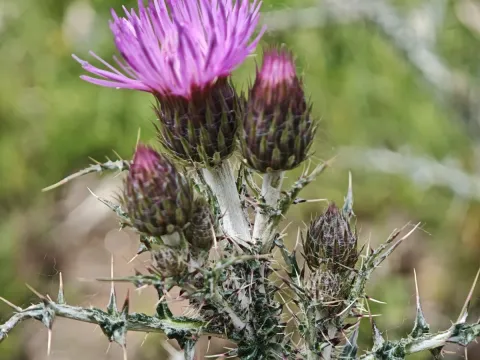
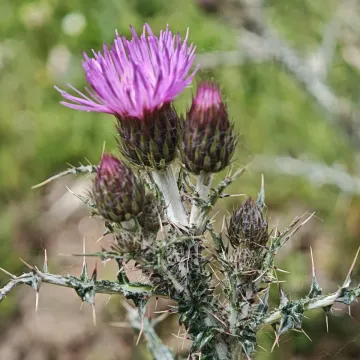
Botanically, Carduus carpetanus features a sturdy taproot system and a rigid, upright stem protected by spiny foliage. The leaves are characteristically pinnatifid and armed with sharp thorns, which serve as an effective defensive mechanism against herbivory. During the flowering stage, the plant produces distinctive purple flower heads that are highly attractive to various pollinators.
Agricultural and gardening requirements focus on full sun exposure and excellent drainage. The species is sensitive to waterlogging, so it should be placed in well-aerated, rocky, or sandy substrates. Due to its aggressive seeding habit, careful monitoring is necessary to prevent it from becoming invasive in neighboring crop fields, as its biological nature makes it a highly efficient competitor for resources.
Regarding хозяйственное use, the plant is primarily valued by beekeepers as a late-season honey source in its native range. Furthermore, in niche agricultural contexts, its biomass may be processed for organic fertilization or, when young, integrated into extensive pastoral management systems. Common pests include aphids and various stem-boring insects, while diseases are typically limited to fungal leaf spots in over-humid conditions.
Photo gallery