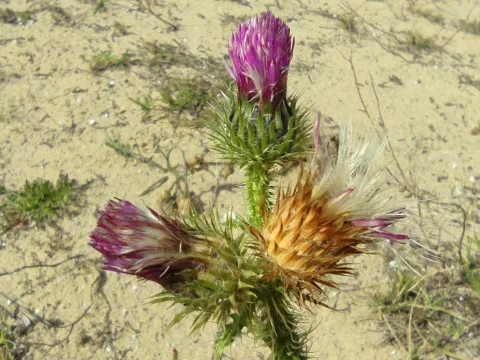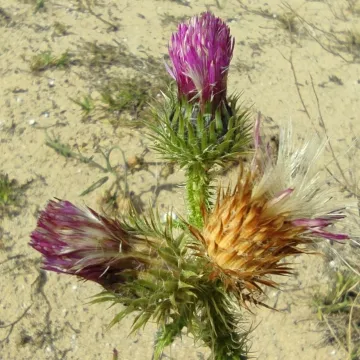
Many-spined thistle
Carduus myriacanthus
Description
Many-spined thistle (Latin: Carduus myriacanthus) is a biennial herbaceous plant belonging to the Asteraceae family. In an agricultural context, it is widely recognized as a problematic weed that disrupts crop production and significantly affects the yield of pasture lands and grain crops due to its rapid proliferation.
The origin of this species is primarily centered in the Mediterranean region. It thrives in open, sun-exposed environments and is commonly found in disturbed soils, roadsides, and abandoned fields. Its ability to colonize marginal lands makes it a persistent challenge for land managers and farmers working in temperate climates.
Botanically, the plant is characterized by a sturdy stem adorned with numerous sharp, hardened spines that serve as an effective defense against herbivory. Its leaves are pinnately lobed and spiny, while the inflorescence consists of dense flower heads containing small, tubular florets that produce vast amounts of wind-dispersed seeds after maturation.
In terms of agricultural requirements, the species is highly adaptable, showing a preference for well-aerated, neutral to slightly alkaline soils. It is particularly drought-tolerant, which gives it a competitive advantage over many sensitive crops in dry seasons. However, the plant does not tolerate deep shade or heavy, waterlogged soil conditions.
The economic impact is generally negative, as it reduces the grazing value of pastures and interferes with mechanical harvesting. Effective management strategies include:
- Deep cultivation to disrupt root systems.
- Applying systemic herbicides during the rosette growth stage.
- Regular mowing to prevent seed bank replenishment.
Regarding health and pests, the many-spined thistle is susceptible to various fungal pathogens, such as rusts and powdery mildew, which can hinder its spread. Furthermore, several species of weevils act as natural insect pests, which, when studied correctly, offer potential avenues for biological control of the population in various agro-ecosystems.
Photo gallery