Lesser pond-sedge
Carex acutiformis
Description
Lesser pond-sedge (Carex acutiformis) is a perennial herbaceous plant belonging to the Cyperaceae family. It is a robust, rhizomatous hydrophyte that characteristically forms dense, uniform stands in wetland habitats, playing a critical role in the stabilization of hydric soils.
The species has a broad native distribution, ranging from Europe to Western Asia and North Africa. It typically inhabits marshes, fens, lake margins, and wet meadows. Because of its ecological preferences, it is frequently utilized in landscape restoration and wetland management projects across temperate climate zones.
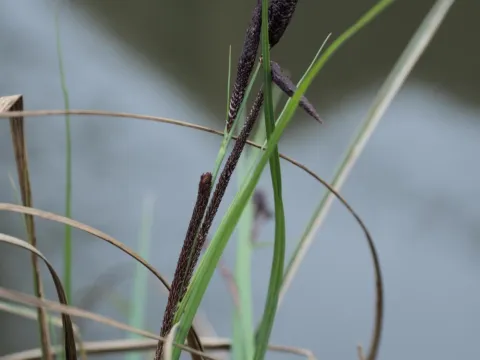
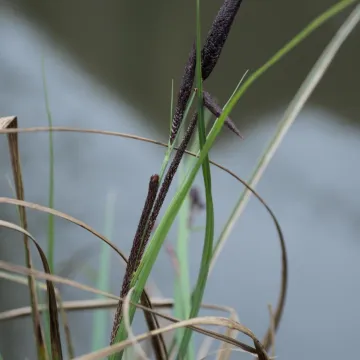
Botanically, Carex acutiformis is identified by its long, creeping rhizomes and triangular, stiff stems reaching heights of up to 1.2 meters. The leaves are broad and greyish-green with a prominent midrib. The inflorescence consists of distinct male and female spikelets, blooming in late spring to early summer.
Agronomic requirements are focused on moisture availability. The plant thrives in saturated to waterlogged soils and is quite tolerant of varying pH levels. In managed settings, it requires little intervention, as it is highly competitive and effectively utilizes nutrients present in the substrate, making it a low-maintenance crop for wet land reclamation.
Agricultural and commercial uses are diverse, ranging from bank stabilization to biomass production for biofuel or pulp. Furthermore, it serves as a bio-filter in constructed wetlands, effectively removing excess nitrates and phosphates from agricultural runoff, which helps in preventing water pollution.
- Excellent soil binder for erosion control
- High biomass production potential
- Resilient to seasonal flooding
- Effective natural water purification agent
Photo gallery