Fibrous tussock-sedge
Carex appropinquata
Description
Fibrous tussock-sedge (Carex appropinquata) is a perennial herbaceous plant belonging to the Cyperaceae family. In agricultural and environmental studies, it is recognized as a key species for managing wet meadowlands and natural peatland pastures, providing essential biomass where typical terrestrial crops cannot survive due to water saturation.
The species is native to temperate zones of Europe and Western Asia. It thrives in lowland fens, marshes, and damp meadows with high water tables. Its natural distribution is tied to nutrient-rich, moist substrates, making it a reliable botanical fixture in landscape restoration projects aimed at rehabilitating post-drainage wetlands.
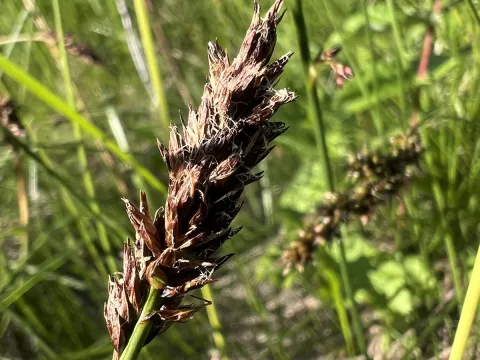
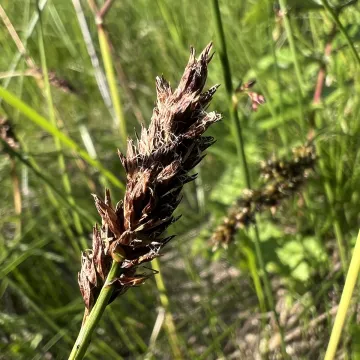
Botanically, the plant is characterized by its distinct, dense tussock-forming growth habit, which allows it to withstand heavy inundation and moderate physical trampling. The stems are triangular and firm, reaching up to 80 cm in height, with dark brown, fibrous leaf sheaths at the base. Its inflorescence forms a compact, brownish panicle, which distinguishes it from other related species in the Cyperaceae family.
From an agricultural standpoint, the cultivation of this sedge revolves around sustainable meadow management. It requires minimal fertilizer inputs as it is highly adapted to organic, nitrogen-rich boggy soils. Effective management involves timely harvesting to ensure the biomass remains palatable for livestock, as mature, lignified stems significantly decrease in nutritional quality.
- Excellent tolerance to saturated and acidic soil conditions.
- High resilience to winter frost and seasonal flooding.
- Valuable for erosion control in drainage canal systems.
- Minimal maintenance compared to cultivated cereal crops.
The economic utility of the fibrous tussock-sedge is primarily focused on hay production for livestock in riparian zones. Beyond forage, its role in preventing soil erosion and filtering runoff water makes it a preferred species in bioengineering and landscape design. Its ability to colonize and stabilize wet, unstable soils provides a dual benefit for agricultural infrastructure and ecosystem conservation.
Photo gallery