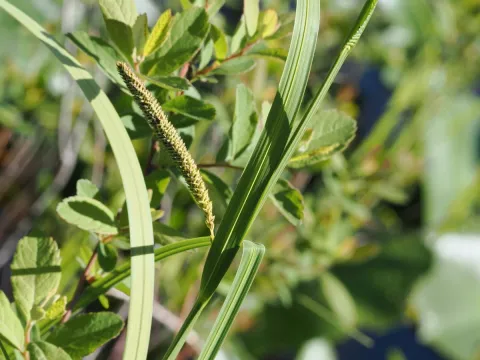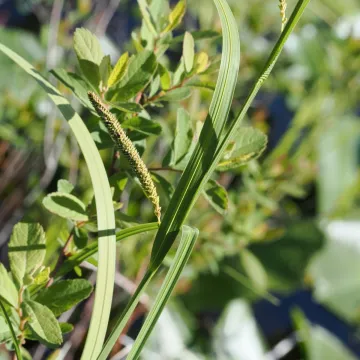
Water sedge
Carex aquatilis
Description
Water sedge (Carex aquatilis) is a perennial herbaceous plant belonging to the Cyperaceae family. As an agricultural and environmental asset, it is recognized as a dominant hydrophytic species that thrives in water-saturated environments and riparian zones where other forage crops struggle to survive.
The plant is native to the northern and temperate regions of the Northern Hemisphere, spanning across North America, Europe, and Asia. Its natural distribution is largely tied to wetlands, river margins, and marshy meadows. In agricultural terms, it is valued for its hardiness and ability to rapidly colonize wet soils, providing essential soil stabilization.
Botanically, the plant features long, creeping rhizomes and erect, leafy stems that can reach up to a meter in height. The foliage is typically glaucous-green, providing high biomass yield in favorable conditions. Its root system is exceptionally dense, which aids in the binding of soil particles and prevents erosion in floodplain areas.
Regarding cultivation requirements, Carex aquatilis favors moist to wet, nutrient-rich soils. It has a high tolerance for stagnant water and prolonged flooding, which are limiting factors for most terrestrial crops. Maintenance involves managing moisture levels to ensure the plant does not succumb to extreme drought during its peak growing season.
The primary economic applications for this culture include:
- Forage production: Often harvested as hay for livestock during the early growth stages.
- Ecological engineering: Used in constructed wetlands for water filtration and phytoremediation.
- Soil stabilization: Essential for preventing riverbank erosion and restoring drained wetlands.
In terms of plant health, water sedge is generally robust, although it can be susceptible to specific rust fungi and leaf-chewing insects during periods of high humidity and poor ventilation. Proper site management, including thinning dense stands, is recommended to prevent the buildup of pathogens.
Photo gallery