Dark-brown sedge
Carex atrofusca
Description
Dark-brown sedge (Carex atrofusca) is a perennial herbaceous plant belonging to the Cyperaceae family. In the context of agricultural and ecological management, it is classified as a native forage species that thrives in wetland environments, playing a vital role in the stability of northern pastures and bog ecosystems.
The species has a circumpolar distribution, extending across arctic and subarctic regions of North America, Europe, and Asia. It is primarily found in areas with high soil moisture, such as fens, peatlands, and the margins of tundra streams. Its adaptation to harsh, cold climates allows it to survive in environments where most agricultural crops would fail.
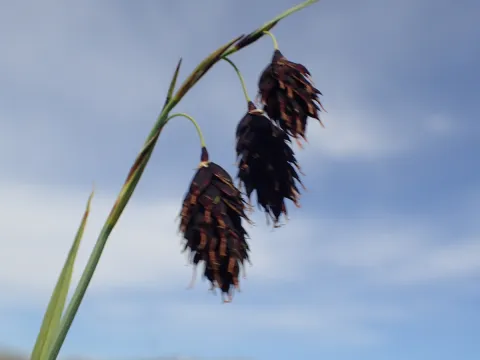
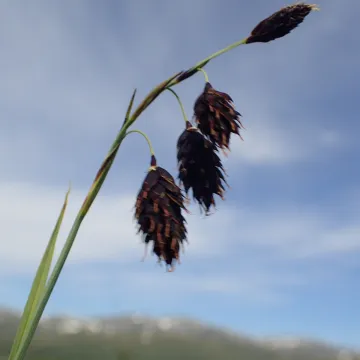
Botanically, Carex atrofusca is characterized by its short rhizomes and loosely tufted growth habit. The stems usually grow between 10 and 40 cm in height, with narrow, dark green leaves. The inflorescence is distinctly marked by dark, almost black spikes, which provide the diagnostic visual identifier for the species during the summer growing season.
Regarding cultivation and habitat requirements, the sedge is highly sensitive to hydrological changes. It thrives in acidic to neutral peat soils that remain saturated throughout the season. Agricultural management, where applicable in arctic regions, involves maintaining stable moisture levels and avoiding soil compaction to prevent the deterioration of the native sod layer.
The primary agricultural use of this plant is as a source of biomass for grazing herds in northern latitudes. It is susceptible to various fungal pathogens that affect leaf health and seed development during damp seasons. Protecting the species from overgrazing and preserving its natural wetland habitat remain the most effective strategies for maintaining the productivity of these unique agricultural grasslands.
Photo gallery