Bigelow's Sedge
Carex bigelowii
Description
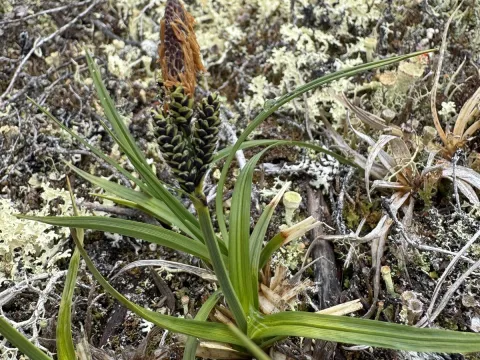
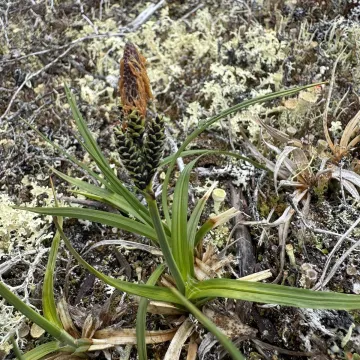
Bigelow's Sedge (Carex bigelowii) is a perennial herbaceous plant belonging to the Cyperaceae (sedge) family. This species is a vital component of arctic and alpine ecosystems, possessing remarkable adaptations that allow it to thrive in high-latitude environments characterized by short growing seasons, permafrost, and extreme cold.
The plant originates from the circumpolar regions of the Northern Hemisphere. Its natural distribution includes the tundra zones of North America, Europe, and Asia. Due to its evolutionary history, it is perfectly suited for harsh environmental conditions where standard forage crops fail to survive, making it a critical resource for subsistence livestock farming in these regions.
Botanically, it is characterized by the formation of dense, low-growing mats or tussocks connected by underground rhizomes. The leaves are tough, narrow, and often involute, designed to minimize transpiration and resist wind damage. The flowering spikes are typically simple, with a terminal male spike and multiple female spikes, ensuring reproductive success even under adverse conditions.
Regarding cultivation, Bigelow's Sedge thrives in acidic, moist, and poorly drained soils, such as peats or wet mineral soils. Agrotechnical management is generally focused on the conservation of natural pastures. Because the growth rate is inherently slow due to the climate, grazing management is crucial; rotational grazing is recommended to prevent overgrazing and the degradation of the delicate root mat.
The primary economic use is as a reliable forage source for reindeer, sheep, and hardy cattle breeds in northern territories. Additionally, it serves as an excellent soil stabilizer, protecting high-altitude or arctic slopes from wind and water erosion. While relatively resistant to major agricultural diseases, the plant can occasionally be impacted by rust fungi or specific local insects, though these typically cause minimal damage to the overall stand.
Photo gallery