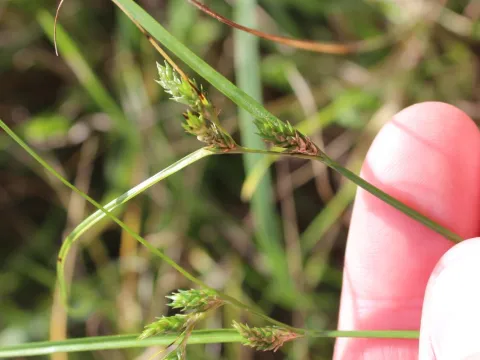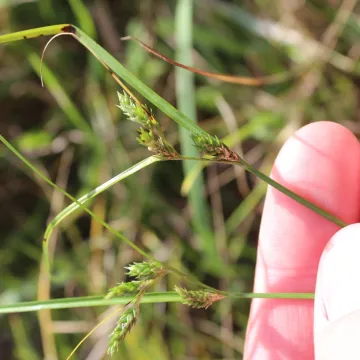
Short-stem sedge
Carex breviculmis
Description
Short-stem sedge (lat. Carex breviculmis) is a perennial grass-like plant belonging to the Cyperaceae family. In agricultural practices, it is recognized for its robust growth habit and ability to form dense sod, making it a valuable component in natural pastures and soil erosion control projects.
The native range of this species extends across East Asia, including Japan, China, and Korea, as well as parts of Australia. It has adapted to a wide array of habitats, ranging from mountain meadows to forest edges, displaying a significant ability to thrive in diverse environmental conditions and climate zones.
Botanically, Carex breviculmis is characterized by its compact, tufted growth. It produces short, narrow leaves that contribute to a dense foliage mat. The root system is fibrous and deep, which not only provides structural stability to the soil but also ensures that the plant remains resilient during periods of limited surface moisture.
Regarding cultivation requirements, the short-stem sedge prefers well-drained, fertile soil. It exhibits high adaptability to varied soil textures, although it performs best in loamy substrates. While the plant is drought-tolerant once established, optimal biomass production is achieved in sites with consistent moisture levels and good exposure to natural light.
In terms of хозяйственное (economic) use, this sedge is primarily utilized for pasture improvement and landscape management. Its high tolerance for trampling and regular mowing makes it an excellent candidate for stabilizing embankments or creating sustainable ground cover in areas with low-maintenance requirements. It also serves as an important source of forage in extensive grazing systems.
- Excellent soil binding properties.
- High tolerance to grazing and trampling.
- Early spring growth initiation.
- Resilience to varying soil conditions.
Common agricultural threats include fungal leaf spots and root pathogens that may occur in conditions of poor drainage or high humidity. Integrated pest management, focusing on proper soil aeration and avoiding excessive nitrogen fertilization, is the most effective approach to maintaining a healthy and productive stand of short-stem sedge throughout its life cycle.
Photo gallery