
Leatherleaf sedge
Carex buchananii
Description
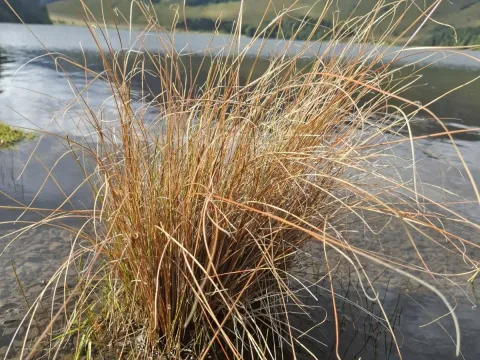
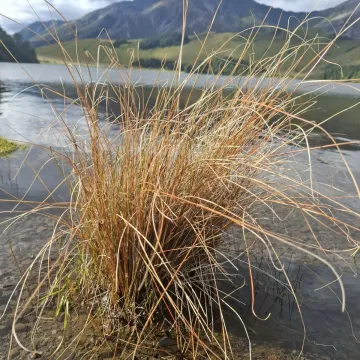
Leatherleaf sedge (Carex buchananii) is a distinctive perennial ornamental plant belonging to the Cyperaceae family. It is highly valued in horticulture for its unique, hair-like foliage that displays a stunning coppery-brown color, which remains vibrant throughout the growing season, providing a modern aesthetic to garden landscapes.
Native to New Zealand, this plant naturally thrives in open, well-lit environments, often found near streams or on rocky slopes. This geographic origin indicates that the species is well-adapted to specific light requirements and requires excellent drainage to mimic its native habitat conditions in a managed garden setting.
Botanically, it forms dense tufts of narrow, thread-like leaves that arch outwards, creating a graceful fountain-like habit. The plant typically reaches a height of 40 to 60 centimeters. The color, often described as metallic or bronze, is a signature trait, making it an excellent choice for color contrast against green-leaved plants or stone-based architectural designs.
Regarding cultural requirements, the Leatherleaf sedge prefers full sun to partial shade and fertile, well-drained soil. It is particularly sensitive to waterlogged conditions, which can lead to root rot during the colder months. While it is hardy in many climates, it may require protection or shelter in regions that experience severe frost or heavy winter rainfall to prevent root damage.
In landscaping, it is frequently used as a specimen plant, in mass plantings, or within rock gardens and containers. Maintenance is relatively simple, requiring only occasional grooming to remove dead foliage in the spring. Typical pests are few, though vigilance against aphids or spider mites during hot, dry spells is recommended to maintain the plant's structural integrity.
- Light: Full sun to light shade.
- Water: Moderate; ensure good drainage to prevent rot.
- Soil: Neutral to slightly acidic, loose, well-drained.
- Hardiness: Generally suitable for USDA zones 6–9.
Photo gallery