Capricorn sedge
Carex capricornis
Description
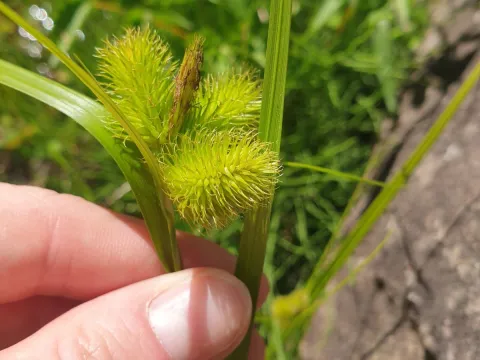
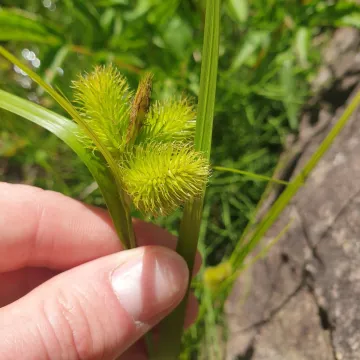
Capricorn sedge (Carex capricornis) is a perennial herbaceous plant belonging to the large Cyperaceae family. It is distinct for its specific reproductive structures, where the perigynia (the sac surrounding the nutlet) exhibit a unique shape resembling the horns of an ibex, which defines the scientific nomenclature.
The plant originates primarily from the wetland ecosystems of East Asia. Its natural distribution is restricted to riparian zones, marshes, and humid meadows where high water tables are maintained throughout the growing season. It thrives in temperate and subtropical climates where humidity is consistently high.
Botanically, Carex capricornis is characterized by dense tussock-forming habits, which are essential for its survival in seasonally inundated landscapes. The leaves are narrow, fibrous, and feature reinforced midribs, providing structural integrity against water movement in its native habitat.
Regarding cultivation requirements, this sedge demands consistently moist to saturated soil conditions. It is best suited for planting in clay-heavy or organic-rich soils. While it is tolerant of low nutrient levels, it performs optimally in soils with a neutral pH, and supplemental irrigation is recommended if the water table drops significantly.
In terms of agricultural use, Capricorn sedge is highly valued for bio-engineering and soil conservation. It is frequently employed to stabilize embankment slopes and as a component in constructed wetlands for water filtration. It faces minimal threats from common pests, although it should be monitored for leaf spot fungi if planted in overly stagnant, non-circulating water bodies.
- Tussock-forming growth habit
- Excellent erosion control properties
- High tolerance to flooding
- Low requirement for chemical fertilizers
Photo gallery