Colchian sedge
Carex colchica
Description
Colchian sedge (Carex colchica) is a perennial herbaceous plant belonging to the Cyperaceae family. It is a rhizomatous species characterized by its ability to spread rapidly in specific habitats, making it a key plant for stabilizing sandy substrates in its natural range.
The native range of this species spans across Southeast Europe, the Caucasus, and parts of Central Asia. It is typically found in steppe zones, coastal regions, and sandy deserts. Its natural distribution is largely determined by its tolerance for well-drained, sandy soils and its resistance to drought-prone conditions.
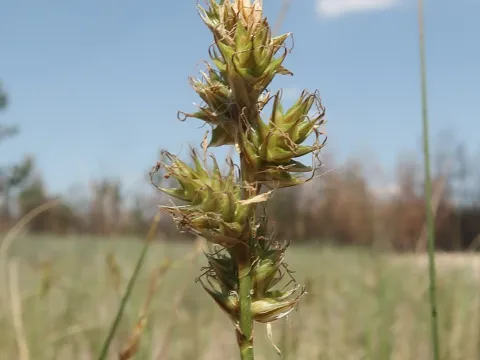
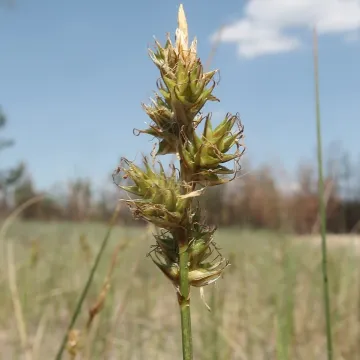
Botanically, Carex colchica is distinct due to its long, creeping rhizomes and narrow, rigid leaves that form dense, low-growing mats. The plant produces a compact, head-like inflorescence during its growth phase. These morphological adaptations facilitate survival in harsh environments where soil nutrient availability is low.
Agronomic requirements for this species are relatively modest. It thrives in sunny locations with high light intensity and well-aerated sandy soil. While it is not a traditional high-yield crop, its cultivation is often focused on soil restoration and erosion management, where vegetative propagation via rhizome division is the preferred method for site colonization.
The main agricultural and ecological use of Colchian sedge is soil stabilization and land reclamation projects. It serves as an effective barrier against wind and water erosion on sandy soils. Although it provides some grazing value, its toughness limits its utility as a primary fodder source. Common issues include rust fungi and aphid infestations, which are typically managed through integrated pest management strategies.
Photo gallery