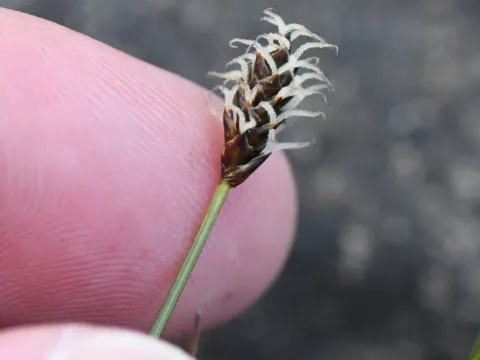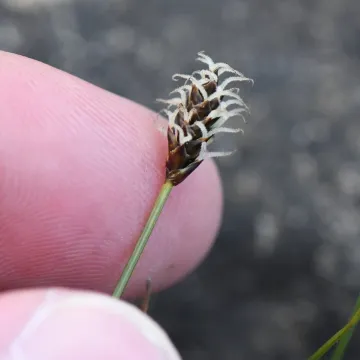

Dioecious sedge
Carex dioica
Description
Dioecious sedge (Carex dioica) is a perennial herb belonging to the Cyperaceae family. In an agricultural context, it is recognized as a specialized species adapted to damp, peat-rich environments, forming a vital component of wetland vegetation, which serves specific ecological functions in managed landscapes.
The native range of this species covers the temperate and boreal regions of Eurasia. It is primarily found in mires, transition bogs, and wet meadows. While it is not a traditional mass-cultivated crop, its ability to thrive in oligotrophic conditions makes it a key species for land restoration and the preservation of biological diversity in moist terrains.
Botanically, Carex dioica is distinguished by its slender rhizomes and compact growth habit. As its name suggests, it is a dioecious species, meaning individual plants produce either male or female flowers. This distinct reproductive strategy requires specific population densities to ensure natural propagation and maintaining the health of the botanical stands.
Regarding cultivation requirements, the species necessitates high water tables and acidic, organic-rich soil types. It is particularly sensitive to hydrological fluctuations; thus, successful agricultural management involves keeping the soil saturation consistent. It does not require high fertilizer inputs, as it is naturally adapted to nutrient-poor, waterlogged substrates.
The economic utility of the dioecious sedge focuses on erosion control and water filtration within agricultural watershed management. It is not traditionally harvested for animal forage due to its fibrous structure and low biomass production. Common threats to the species include site drainage, land development, and fungal pathogens that often attack the roots during periods of inconsistent moisture or extreme soil stagnation.
Photo gallery