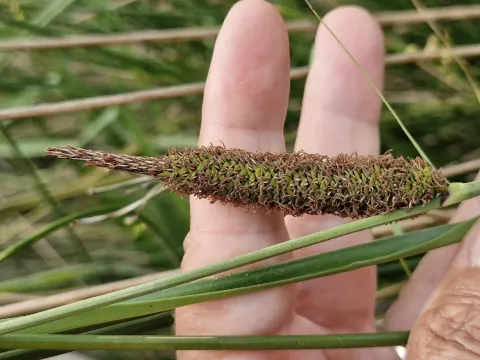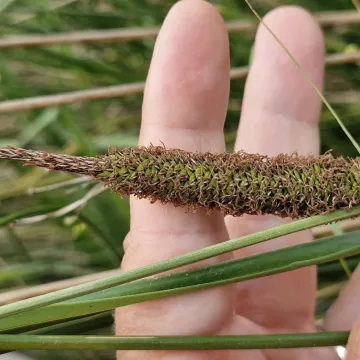
Bristly sedge
Carex hispida
Description
Bristly sedge (Latin: Carex hispida) is a robust perennial herb belonging to the Cyperaceae family. This species is widely recognized in horticultural and ecological circles for its dense growth habit and ability to thrive in environments that would be challenging for many other crops or ornamental plants.
The plant originates primarily from the Mediterranean region, where it has historically inhabited wetland fringes, riverbanks, and marshy meadows. Its natural distribution is linked to areas with consistent water availability. Due to its adaptability, it has been introduced to various temperate regions where it successfully integrates into local landscapes and naturalistic garden designs.
Botanically, Carex hispida is characterized by its stiff, rough-textured leaves, which give the plant its specific epithet. It develops a thick, rhizomatous root system that creates a dense mat, effectively stabilizing soil. During the flowering stage, it produces distinct spikelets that add aesthetic value to the foliage, which remains the plant's primary decorative feature throughout the season.
In terms of agricultural and horticultural requirements, this sedge demands consistently moist to wet soils. It prefers neutral to slightly acidic pH levels and performs best in locations that receive full sun to partial shade. Standard cultivation practices involve maintaining adequate soil moisture and dividing mature clumps every few years to maintain vigor and prevent over-crowding in garden beds.
- Excellent tolerance for waterlogged soil conditions.
- Superior soil stabilization properties for erosion control.
- Low maintenance requirements once established.
- Resilient to a variety of environmental stressors.
Economic and landscaping applications are significant. The plant is frequently employed in bioengineering projects to prevent soil erosion along water bodies. In horticulture, it is a staple for planting around the edges of ornamental ponds and in rain gardens, where its structural form provides a strong contrast to softer, flowering perennials.
Regarding health management, Carex hispida is generally hardy, though it may be susceptible to fungal leaf spots if airflow is restricted in extremely humid conditions. Pests are rarely a major issue, but occasional monitoring for aphids during early spring growth is recommended to ensure the long-term health and aesthetic quality of the sedge plantings.
Photo gallery