Inverse sedge
Carex inversa
Description
Inverse sedge (Carex inversa) is a perennial grass-like plant belonging to the Cyperaceae family. While not a conventional staple crop, it serves important ecological and agricultural roles, particularly in soil conservation and the management of riparian zones and degraded land areas.
Originating primarily from Australia and New Zealand, this species has naturalized in several temperate and subtropical regions globally. It thrives in various habitats, demonstrating an impressive ability to colonize damp meadows, marshy borders, and areas with disturbed topsoil, making it a robust pioneer species.
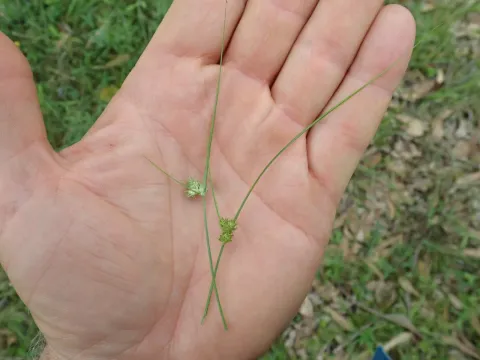
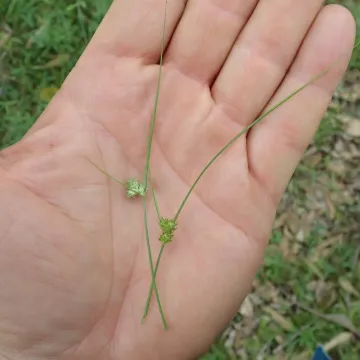
Botanically, Carex inversa is recognized by its dense, tufted growth habit and narrow, grass-like leaves. Its defining characteristic is the specific, often "inverted" appearance of its spikelets, which gives the plant its scientific name. The root system is fibrous and dense, providing excellent structural integrity to the soil matrix.
Cultivation requires attention to moisture levels, as the species performs best in moist, well-draining soils. It is relatively undemanding regarding nutrient inputs but responds well to light fertilization in a controlled agricultural setting. It can tolerate full sun to partial shade, depending on the availability of soil moisture throughout the growing season.
The main agricultural applications for this sedge involve erosion control, riparian restoration, and use as a ground cover to prevent weed infestation in pasture buffers. Although it provides some grazing utility, it is generally considered a secondary forage plant due to the high silica content in its leaves, which reduces its palatability for livestock compared to true grasses.
- Adaptation to various soil types.
- Excellent ground stabilization properties.
- High tolerance to environmental stressors.
- Natural ability to outcompete common weeds.
Common pests include aphids and soil-borne nematodes that can weaken the root system. Pathological issues are usually limited to fungal infections like leaf spot or rust, which are frequently exacerbated by poor air circulation or prolonged standing water in extremely dense plant stands, requiring periodic thinning for prevention.
Photo gallery