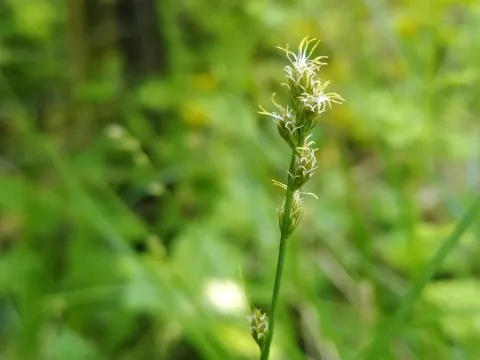
Leers' sedge
Carex leersii
Description
Leers' sedge (Carex leersii) is a perennial herbaceous plant belonging to the Cyperaceae family. Within agricultural environments, it is recognized as a persistent species capable of establishing itself in moist meadows and wetlands where standard fodder crops struggle to survive, providing stable biomass production.
The plant is native to temperate regions of Europe and parts of Asia. It thrives in habitats characterized by high soil moisture levels, including floodplains and low-lying field sections. Its presence is often associated with stable wetland ecosystems and indicates potential suitability for pasture management in areas prone to seasonal inundation.
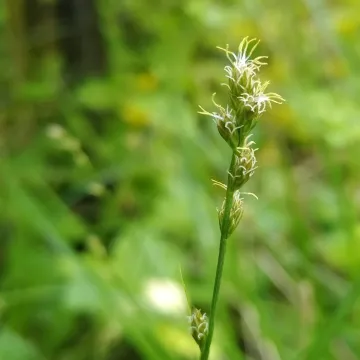
Botanically, this sedge is distinguished by its tufted growth habit and stiff, linear, dark green leaves. The inflorescence consists of spikes that are characteristic of the Carex genus. Its root system is fibrous and dense, playing a critical role in binding the soil and maintaining its integrity against water-based erosion.
Agricultural cultivation of Leers' sedge requires careful attention to soil hydrology. It performs best in moist, nutrient-rich soils with a near-neutral pH. Unlike intensive crops, it demands minimal intervention, yet it requires consistent moisture throughout the growing season to reach its maximum biomass potential and avoid senescence caused by drought stress.
The primary economic utility of Leers' sedge lies in its function as a component of wet pasture grass mixtures and its role in landscape restoration. While not a primary fodder source due to its coarse texture, it is valued for its hardiness and ability to improve soil structure, making it a reliable option for vegetative covering in difficult-to-drain agricultural landscapes.
- Excellent tolerance to saturated soil conditions
- Effective for preventing soil erosion
- Significant cold resistance
- Low maintenance requirements
Photo gallery