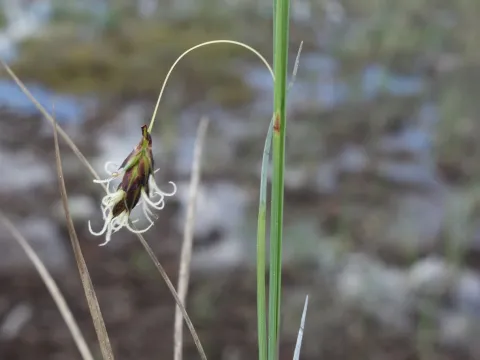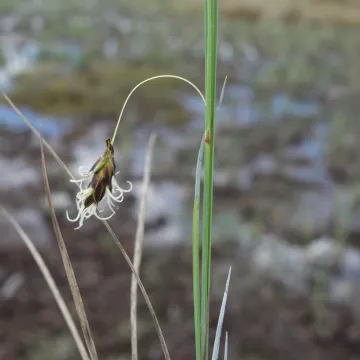
Mud sedge
Carex limosa
Description
Mud sedge (Carex limosa) is a perennial herbaceous plant belonging to the Cyperaceae family. It is a specialized hydrophyte, perfectly adapted to the harsh conditions of peatlands and boggy environments. The plant features creeping rhizomes, which allow it to form mats or loose colonies on unstable, waterlogged soil surfaces, playing a role in stabilizing wet terrains.
The native distribution of Carex limosa encompasses the boreal and temperate zones of the Northern Hemisphere, spanning across Eurasia and North America. It is typically found in fens, bogs, and along the muddy margins of stagnant water bodies. In an ecological and agronomic context, it acts as a key indicator species for nutrient-poor, acidic conditions where water levels remain consistently high.
Botanically, this species is characterized by slender, glaucous-green leaves and nodding flower spikes. The inflorescence usually consists of a single terminal spike that exhibits a graceful, drooping habit. The seeds are notably buoyant, an evolutionary adaptation that facilitates dispersal via water currents within wetland habitats, ensuring the colonization of new suitable spots.
Regarding climate and soil requirements, the species is highly specialized. It demands saturated, acidic to neutral soil conditions and cannot tolerate prolonged drought or high concentrations of mineral fertilizers. While not a conventional agricultural crop, it is utilized in environmental engineering for the restoration of degraded wetlands, where its ability to bind soil and process organic matter is highly valued.
The primary directions for the economic and environmental application of mud sedge include:
- Bio-remediation and stabilization of soil in restored peatlands.
- Utilization as a biological indicator for monitoring wetland health.
- Serving as a structural component for the restoration of endangered bog ecosystems.
In terms of plant health, Carex limosa is highly resilient within its native ecosystem. Its specialized habitat largely prevents the spread of typical agricultural pests and pathogens that thrive in warmer, dryer environments. While some fungal infections or minor insect herbivory may occur, they rarely reach epidemic levels, meaning that chemical control is neither necessary nor recommended in natural or restoration settings.
Photo gallery