Lyngbye's sedge
Carex lyngbyei
Description
Lyngbye's sedge (Carex lyngbyei) is a robust perennial herb belonging to the Cyperaceae family. In agricultural and environmental management, this species is highly valued for its exceptional ability to thrive in waterlogged, saline, and unstable soil conditions where traditional forage crops would fail to establish.
The native distribution of this plant includes the coastal regions of the North Pacific. It is naturally adapted to salt marshes, river estuaries, and coastal meadows from East Asia across to the Pacific Northwest of North America. Its natural habitat is defined by frequent tidal influence and fluctuating moisture levels, making it a critical species for coastal resilience.
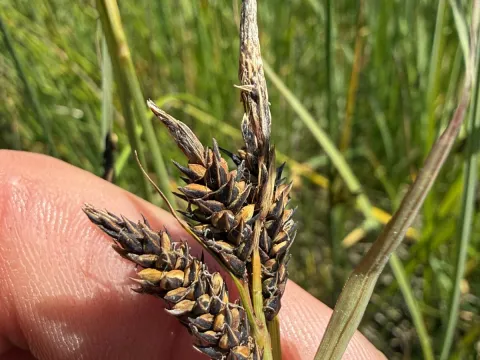
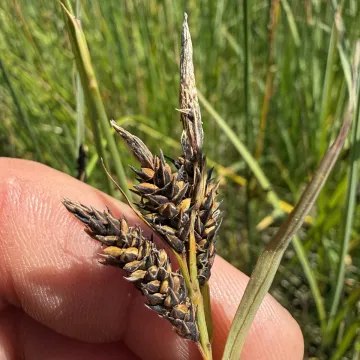
Botanically, Carex lyngbyei is characterized by a vigorous rhizomatous system that binds soil particles together, forming a dense sod. Its leaves are stiff and linear, providing a significant biomass yield in its natural habitat. The plant typically blooms in late spring and early summer, producing distinct spikelets that allow for efficient seed dispersal in wetland environments.
Agricultural requirements for Lyngbye's sedge focus on high moisture availability and stable, organic-rich substrates. While it is highly salt-tolerant, it performs best in soils with adequate drainage that prevents toxic anaerobic accumulation. Cultivation protocols involve minimal soil disturbance, as the primary objective is to maintain the integrity of the rhizome network for soil stabilization.
Economic and agricultural utility includes:
- Provision of grazing resources in marginal coastal wetlands.
- Bio-engineering for shoreline stabilization and dike protection.
- Carbon sequestration in coastal marsh restoration projects.
- Sustainable harvesting for traditional fiber and bedding materials.
The plant is generally resilient, but it can be susceptible to fungal pathogens such as rusts and smuts during prolonged periods of high humidity and poor air circulation. Pests, including various stem-boring insects, can impact biomass yield if not managed through proper rotational grazing or harvesting cycles. Integrated management practices are essential to ensure the long-term productivity of sedge stands.
Photo gallery