Largehead sedge
Carex macrocephala
Description
Largehead sedge (lat. Carex macrocephala) is a perennial herbaceous plant belonging to the Cyperaceae family. It is recognized as a vital species for ecological restoration, specifically adapted to thrive in harsh, unstable environments where few other plants can establish a foothold.
The native range of this species spans the coastal regions of the North Pacific, covering parts of East Asia, the Russian Far East, Japan, and North America. It is an characteristic component of dune ecosystems, where it plays a critical role in maintaining the integrity of sandy shorelines against natural degradation.
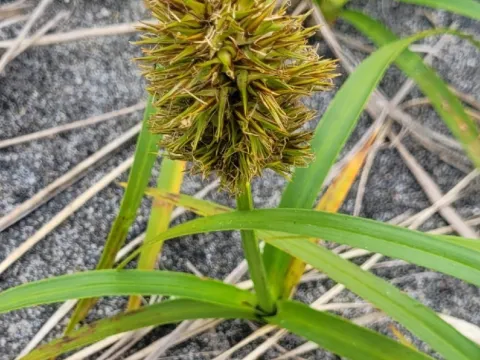
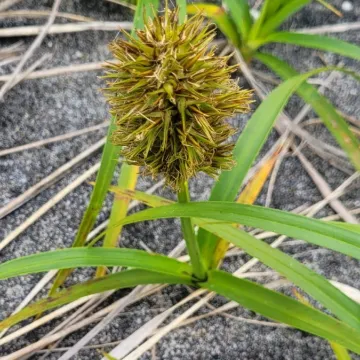
Botanically, the species is defined by its extensive, creeping rhizome system that acts as a structural anchor in loose soil. The plant features firm, grey-green foliage and a distinct, large, cone-like inflorescence, which is a key diagnostic feature. The rhizomes can spread over long distances, allowing the plant to quickly colonize large areas of sand.
Regarding cultivation requirements, the plant is exceptionally hardy. It prefers sandy, well-drained soils and is highly tolerant of saline conditions common in maritime climates. Agronomically, it requires little to no maintenance, as it is naturally adapted to low-nutrient substrates and can survive burial by shifting sand, which often stimulates its growth rather than inhibiting it.
The primary utility of Carex macrocephala is in the fields of land reclamation and soil conservation. By stabilizing shifting dunes, it prevents erosion and creates favorable conditions for secondary succession of other vegetation. Furthermore, the species demonstrates robust resistance to pests and diseases, making it a low-input, sustainable solution for maintaining coastal stability and mitigating environmental damage.
Photo gallery