Black-spiked sedge
Carex melanostachya
Description
The black-spiked sedge (Carex melanostachya) is a perennial herbaceous plant belonging to the Cyperaceae family. It is a rhizomatous species characterized by its robust growth habit, which allows it to form dense stands in various wetland habitats across its native range.
The distribution of this species spans across the Eurasian continent, particularly within steppe and forest-steppe regions. It is well-adapted to floodplains and saline-alkaline soils, demonstrating a remarkable tolerance for fluctuating water levels and varying temperatures common in its native climates.
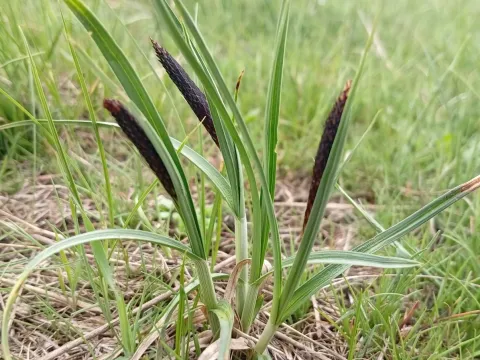
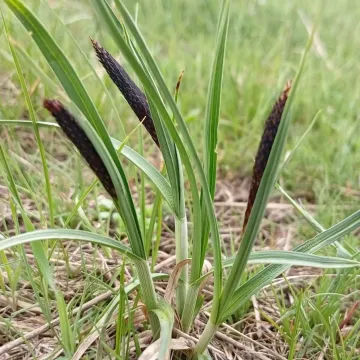
Botanically, the plant is identified by its stiff, linear leaves and distinct dark-colored, almost black inflorescences. The root system is complex and allows the sedge to secure itself in unstable soil substrates, providing a significant advantage in colonizing disturbed riparian zones.
From an agronomic perspective, this species requires minimal maintenance but performs best in moisture-retentive soils with high organic matter content. While not typically harvested as a primary commercial crop, it is managed in semi-natural grazing systems where its ability to withstand drought stress makes it a reliable forage source.
Economic applications for this crop are diverse, ranging from erosion control in agricultural buffer strips to serving as a supplemental forage source in extensive pastoral systems. Proper management, including timely harvest before lignification, is necessary to maximize the nutritive value of the biomass.
- Excellent tolerance to saline soil conditions.
- Strong root system for effective erosion control.
- High resilience in extreme weather conditions.
- Low-input requirements for land management.
Photo gallery