Micheli's sedge
Carex michelii
Description
Micheli's sedge (Carex michelii) is a perennial herbaceous plant belonging to the Cyperaceae family. In agronomic practice, this species is categorized as a vital component of diverse grassland ecosystems, recognized for its durability and structural role in maintaining the botanical composition of natural pastures.
The plant is native to various regions across Europe and temperate Asia, naturally inhabiting open woodlands, forest edges, and light meadows. Its broad distribution is evidence of its adaptability to diverse environmental conditions, ranging from semi-shaded areas to fully exposed grassland habitats where it thrives alongside other forage species.
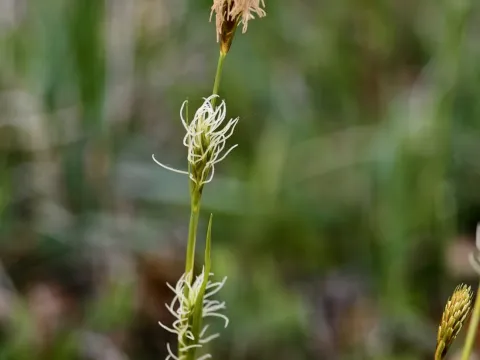
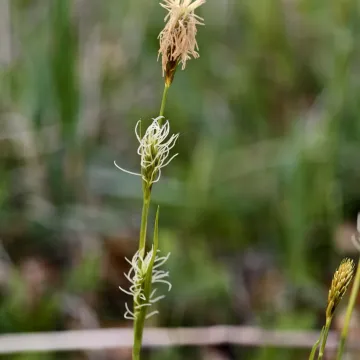
Botanically, this species is characterized by a rhizomatous growth habit, which allows it to form stable, loose tufts. The culms reach heights of 20 to 50 centimeters, adorned with stiff, grayish-green linear leaves. The inflorescence consists of distinct spikes that mature in the late spring or early summer, facilitating efficient propagation via both seeds and vegetative expansion.
Agronomic requirements for Micheli's sedge include well-drained, moderately fertile soils. While it is tolerant of various soil types, it performs best in environments where moisture is consistently available without waterlogging. Minimal maintenance is required, though controlled grazing or mowing intervals are beneficial for maximizing the plant's forage density and long-term vitality.
The primary economic use of this plant is found in grassland management and soil conservation. It serves as a secondary forage source, providing bulk to hay yields, and is highly valued for its ability to stabilize soil on slopes and embankments. Its dense root system significantly reduces the risk of topsoil erosion, making it a functional choice for land reclamation.
- Requires moderate soil fertility.
- Highly resistant to dry spells.
- Effective for slope stabilization.
- Can be managed with periodic mowing.
Disease management focuses mainly on preventing rust fungi, which may thrive in excessively humid conditions. Monitoring for common grassland pests, such as leaf-eating insects, is recommended for maintaining optimal stand health. Consistent observation of the crop's vigor ensures that it continues to contribute effectively to the ecosystem and agricultural utility.
Photo gallery