Few-seeded sedge
Carex oligosperma
Description
Few-seeded sedge (Carex oligosperma) is a perennial grass-like plant belonging to the Cyperaceae family. It is a highly specialized species that typically inhabits acidic, boggy environments. The plant is known for its rhizomatous growth habit, which helps it form extensive mats in peatlands.
The native range of this species covers the northern parts of the Northern Hemisphere, spanning across Canada, the United States, Europe, and Northern Asia. It is particularly well-adapted to cool climates and is a frequent component of vegetation in boreal peatlands and nutrient-poor wetlands.
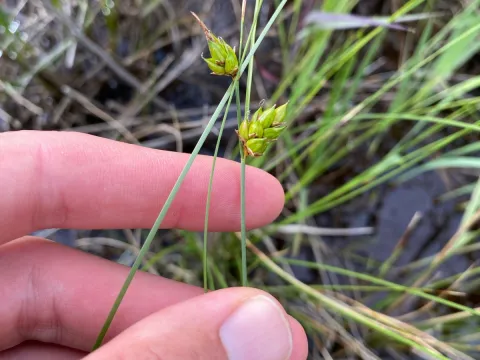
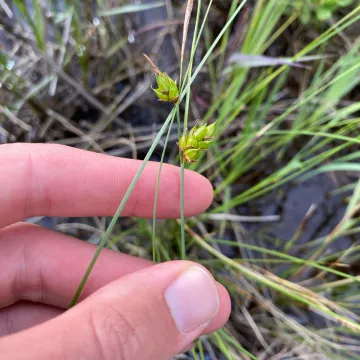
Botanically, the plant is characterized by its slender, erect stems growing from 30 to 80 cm in height. The leaves are narrow, channelled, and tough, providing resilience against environmental stresses. The inflorescence is relatively sparse, with few perigynia (the sac surrounding the fruit), which serves as a primary identifying feature of the species.
The plant thrives in saturated, acidic soil conditions. In terms of agronomy or land management, it requires minimal intervention. It does not demand fertilization, as it is naturally evolved to survive in oligotrophic environments where nitrogen and phosphorus levels are low. Maintenance efforts, if any, are focused on protecting the hydrological integrity of the site.
The primary utility of Carex oligosperma is ecological restoration, particularly for reclaimed peatlands and degraded wetland sites. It provides habitat and structural diversity for local wildlife. While it may occasionally face pressure from rust fungi or leaf-feeding insects, these issues are usually minor and do not pose a threat to the stability of the plant populations in their native range.
Photo gallery