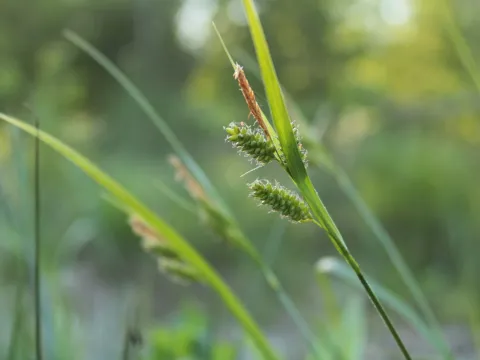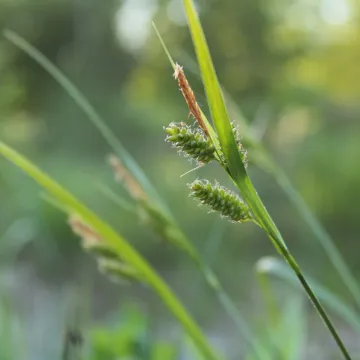
Pale sedge
Carex pallescens
Description
Pale sedge (Latin: Carex pallescens) is a perennial herbaceous plant belonging to the Cyperaceae family. It is a vital member of natural grassland ecosystems, characterized by its ability to thrive in moist environments and its distinctive appearance during the flowering season.
The plant originates from the temperate regions of Europe, Asia, and North America. It is typically found in habitats such as damp meadows, open woodlands, and along stream banks. Its geographic distribution demonstrates a high level of adaptation to fluctuating environmental conditions, provided there is sufficient soil moisture available throughout the growing season.
Botanically, this species is defined by its pale green or yellowish flower spikes, which give it its common name. The plant grows in loose tufts, typically reaching heights of 40 to 60 centimeters. Its narrow leaves are well-adapted to photosynthesizing efficiently in both shaded and partially sunny areas, allowing it to compete successfully with other meadow species.
Regarding agrotechnical requirements, pale sedge is best suited to nutrient-rich, moist loamy soils. While it does not require intensive cultivation techniques, maintaining an appropriate mowing schedule is essential to preserve the quality of the forage stand. It shows good resilience to various temperatures, making it a reliable component of temperate pasture systems.
The main agricultural and economic uses include:
- use in grazing systems on wet lands where other grasses fail;
- soil stabilization in areas prone to erosion;
- enhancement of biodiversity in reclaimed meadow areas;
- use as a supplementary fiber source in livestock feeding programs.
Like many members of the Cyperaceae family, this plant can be susceptible to fungal diseases, particularly rust and smut, especially in areas with poor drainage or excessive humidity. Pests are generally minimal under natural conditions, but monitoring for herbivorous insects is advised during periods of rapid vegetative growth to ensure the health of the plant stand.
Photo gallery