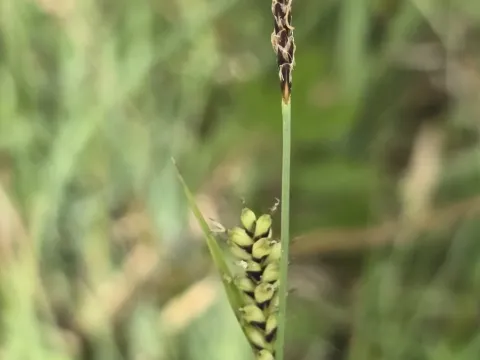
Carnation sedge
Carex panicea
Description
Carnation sedge (Latin: Carex panicea) is a perennial herbaceous plant belonging to the Cyperaceae family. In agricultural contexts, this species is recognized for its ability to thrive in wetland habitats and is managed as a specialized forage plant for areas with seasonal waterlogging or high soil moisture levels.
The native range of the species covers temperate and boreal regions of Europe, the Caucasus, Western Siberia, and North America. It is naturally found in meadows, marshes, and damp heaths. As a crop, it is particularly valued in regions where soil moisture levels prevent the cultivation of conventional forage grasses, offering a productive solution for marginal land.
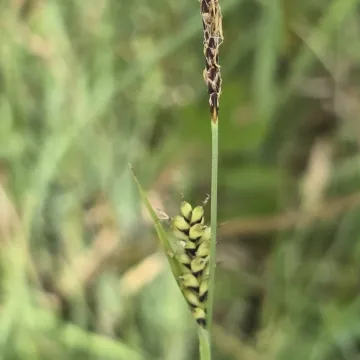
Botanically, Carex panicea is characterized by creeping rhizomes that form loose tufts. Its stems typically reach 20–50 cm in height, and the leaves have a distinctive glaucous, blue-green appearance. The inflorescence consists of a terminal male spike and several lateral female spikes, with fruit protected by inflated perigynia, which gives the plant its unique visual profile.
Agronomic requirements are centered on maintaining high moisture levels, as the plant is not drought-tolerant. It prefers neutral to slightly acidic, organic-rich soils. While it is hardy and does not require intensive fertilization, optimal yields are achieved through soil drainage management that prevents stagnant water while ensuring constant capillary moisture supply.
The main agricultural use of carnation sedge is the creation of permanent hay meadows in moist conditions where other grasses fail. Beyond its forage value, it is highly effective in land reclamation and riparian zone protection, helping to prevent soil erosion. It also serves as an important component in ecological restoration projects aiming to revitalize degraded wetland habitats.
- Exceptional tolerance to waterlogged soils.
- Significant potential for land reclamation projects.
- Low maintenance requirement compared to traditional grasses.
- Provides erosion control on wetland edges.
Pathogenic threats include various rust fungi and smut species that occasionally affect the foliage and reproductive structures. Pests are rarely a major issue if the sward is maintained in a healthy state. Proper management, including timely mowing and limiting excessive grazing pressure, ensures the long-term vitality of the stand and reduces the risk of fungal outbreaks.
Photo gallery