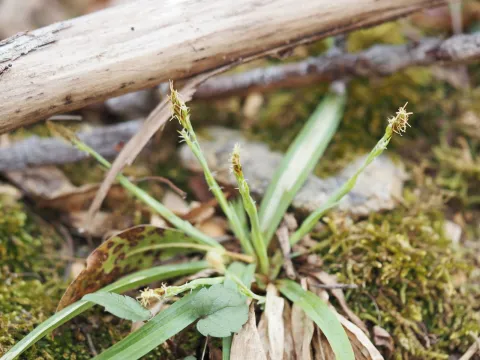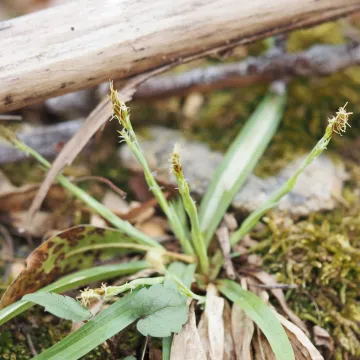
Broad-leaved sedge
Carex platyphylla
Description
Broad-leaved sedge (Carex platyphylla) is a perennial grass-like plant belonging to the Cyperaceae family. In horticultural practice, it is highly regarded for its wide, distinctively colored foliage, which provides texture and interest in shade gardens where most grasses fail to thrive.
Originating from the eastern regions of North America, this species naturally inhabits deciduous forests and rocky slopes. Because of its native origin, it is well-adapted to temperate climates, showing significant hardiness and resilience in various environmental conditions across USDA hardiness zones.
The botanical identity of Carex platyphylla is defined by its broad leaf blades, reaching up to 2.5 cm in width, which often exhibit a silvery-blue or glaucous tint. The plant typically reaches a modest height of 30–40 cm, forming elegant, arching mounds that create a carpet-like effect over time.
Regarding agrotechnical requirements, it favors well-drained, humus-rich soils with consistent moisture. While it is not a heavy feeder, applying organic mulch can help retain soil moisture and suppress weed growth. The plant is considered low-maintenance, requiring only occasional clean-up of dead foliage in early spring to encourage new growth.
This species is predominantly used in landscaping for woodland garden designs and erosion control on shady embankments. It is remarkably robust against most common pests and fungal diseases. Its natural health profile allows it to maintain structural integrity throughout the season without the need for chemical treatments or intensive manual intervention.
Photo gallery