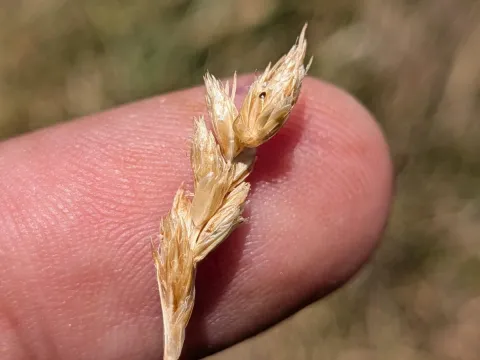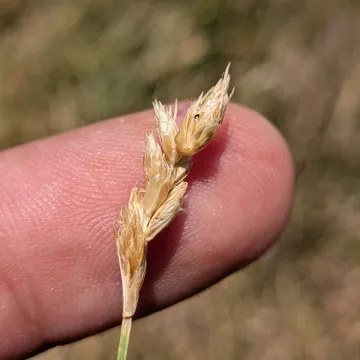
Clustered field sedge
Carex praegracilis
Description
Clustered field sedge (Carex praegracilis) is a versatile perennial species belonging to the Cyperaceae family. Widely recognized for its exceptional resilience, this plant has gained popularity in both ecological restoration projects and water-wise landscaping due to its ability to thrive in challenging environmental conditions where typical lawn grasses fail.
Native to North America, the species is found across a wide geographic range, extending from moist meadows to dry, saline-impacted environments. This broad natural distribution has endowed the plant with significant physiological plasticity, allowing it to adapt to diverse soil pH levels, varying light intensities, and severe moisture deficits, which is a key advantage for modern agricultural and environmental applications.
From a botanical standpoint, it is a rhizomatous perennial that spreads through vigorous underground runners, enabling the formation of a dense, uniform mat. The foliage consists of narrow, deep-green leaves that maintain a refined appearance throughout the growing season. The plant's deep root system is particularly notable, providing excellent soil stabilization and allowing it to remain green during summer heatwaves.
The agronomic requirements for Carex praegracilis are relatively modest compared to traditional turfgrasses. It performs best in well-drained soils but shows remarkable tolerance to occasional inundation and soil salinity. Maintenance practices primarily involve controlled irrigation during the establishment phase and occasional mowing if a low-profile, manicured lawn effect is desired, though it can be left unmown for a natural aesthetic.
In terms of хозяйственное (economic/practical) use, the plant is widely utilized for erosion control, xeriscaping, and sustainable ground cover. While generally robust and pest-resistant, growers should monitor for potential fungal issues or infestations in overcrowded plantings. Effective management and occasional fertilization ensure the long-term vitality of the stand, making it a reliable choice for sustainable landscape development.
Photo gallery