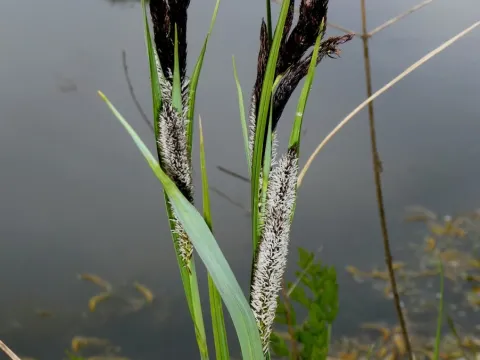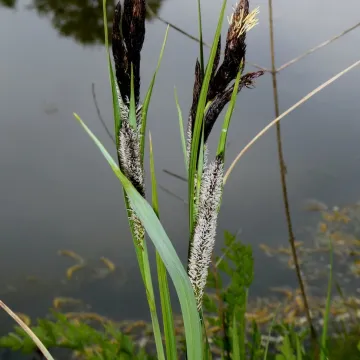
Greater pond sedge
Carex riparia
Description
Greater pond sedge (Carex riparia) is a robust perennial herb belonging to the family Cyperaceae. It is a dominant species in wetland ecosystems, valued for its vigorous growth and ability to stabilize saturated soils. Unlike many agricultural crops that require drainage, this plant thrives specifically in waterlogged conditions.
The native range of Carex riparia spans across Europe, parts of Asia, and North Africa. It is frequently found in riverbanks, floodplains, and marshes where the water table is persistently high. Its geographical adaptability has made it a preferred choice for large-scale wetland restoration and sustainable land management projects in temperate climates.
Botanically, this sedge is defined by its long, creeping rhizomes and triangular stems that grow up to 1.5 meters tall. The leaves are broad (up to 15 mm), stiff, and grayish-green. The plant produces distinctive flowering spikes in late spring and early summer, which are crucial for the local ecosystem as they provide shelter and food for various fauna.
Regarding cultivation requirements, Carex riparia is undemanding and thrives in silt, clay, or peat soils. It demonstrates exceptional frost hardiness and competitive capacity. The primary challenge in agricultural or landscape management is controlling its rapid spread, as the rhizomatous root system allows it to quickly colonize surrounding areas, forming dense, monocultural stands.
Main directions for economic and environmental use include:
- Erosion control along riverbanks and irrigation ditches.
- Phytoremediation to naturally treat municipal or agricultural wastewater.
- Sustainable harvest of biomass for specialized industrial purposes.
- Creation of buffer zones to protect water bodies from runoff.
The species is remarkably resilient against most common agricultural diseases, although rust fungi may occur in poorly ventilated, stagnant conditions. Pests such as aphids or sedge-specialized larvae are rarely problematic enough to require chemical intervention. Overall, Carex riparia serves as a low-maintenance, ecologically beneficial tool for managing challenging, wet environments.
Photo gallery