Rock sedge
Carex rupestris
Description
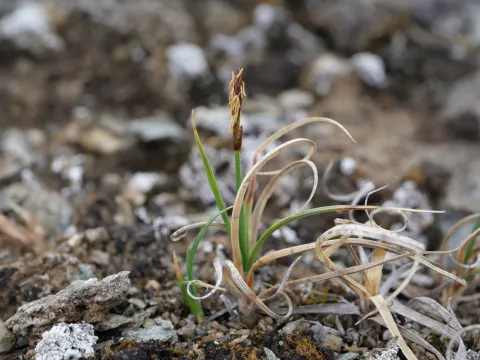
Rock sedge (lat. Carex rupestris) is a perennial herbaceous species belonging to the Cyperaceae family. It is a highly specialized plant adapted to extreme environments, known for its resilience in mountainous and arctic regions. As a cultivated species, it is valued for its unique texture and ability to thrive where traditional garden plants fail.
The origin of Rock sedge is rooted in the alpine and arctic zones of the Northern Hemisphere, where it occupies exposed rocky outcrops and calcareous slopes. Its natural distribution demonstrates a remarkable tolerance for nutrient-poor soils and extreme temperature fluctuations. In agricultural and horticultural contexts, it is classified as a niche plant for rock gardens and slope stabilization.
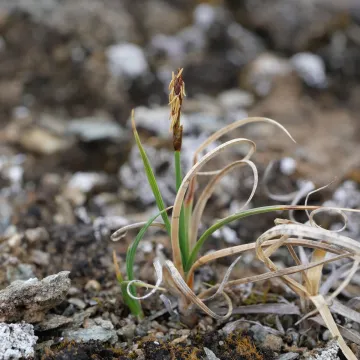
Botanically, this species is characterized by its tufted growth habit and creeping, woody rhizomes. The leaves are typically narrow, stiff, and involute, which helps the plant conserve moisture. The inflorescence consists of a solitary spike, distinguishing it from many other Carex species. Its root system is deep and efficient, designed to anchor the plant firmly into rocky substrates.
The cultivation requirements are specific: Rock sedge demands full sun exposure and extremely well-drained, gritty, or sandy soils with a neutral to alkaline pH. It is intolerant of waterlogging and heavy, nutrient-rich garden soils. Agrotechnical management requires minimal intervention; the key to success is mimicking its native alpine environment, ensuring that the plant is not outcompeted by faster-growing species.
Regarding хозяйственное use, Rock sedge is primarily an ornamental crop used in rockeries, xeriscaping, and sustainable landscaping. It is highly resistant to standard pests, though it may occasionally suffer from root rot if drainage is insufficient. There are no major economic pests of concern, as the plant's tough foliage is largely unpalatable to common garden herbivores.
Photo gallery