Salt-marsh sedge
Carex salina
Description
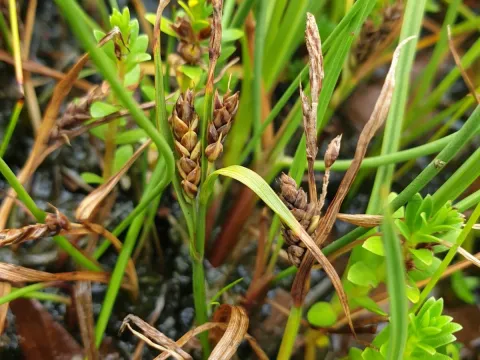
Salt-marsh sedge (Latin: Carex salina) is a perennial herbaceous plant belonging to the Cyperaceae family. It is a highly specialized species that thrives in challenging environments characterized by high salinity and fluctuating water levels, making it a key plant in coastal and estuarine ecosystems.
The species is primarily distributed throughout the circumboreal regions, including coastal areas of North America and Eurasia. Its ability to colonize salt-affected soils distinguishes it from many other grass-like species, positioning it as an important plant for ecological restoration and coastal protection.
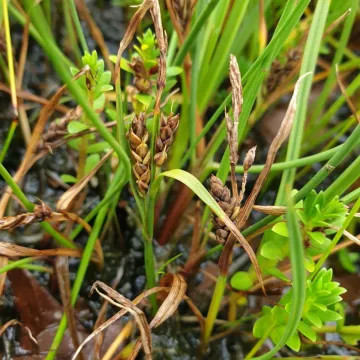
Botanically, Carex salina is defined by its creeping rhizomes and erect, sturdy stems. The leaves are typically linear and display a glaucous color, which helps the plant manage transpiration under harsh wind and high-salt conditions. It produces spike-like inflorescences that facilitate dispersal across wetland habitats.
Regarding cultivation and agronomy, the plant is not typically managed as a conventional crop but is highly valued for its role in wetland management. It prefers water-logged, saline-rich substrates and requires minimal maintenance if the hydrological regime is naturally preserved. It serves as an indicator of healthy, periodically flooded saline marshlands.
The primary agricultural utility of salt-marsh sedge involves its role as forage in extensive grazing systems where other species cannot survive. Furthermore, it is essential for bioengineering projects aimed at preventing coastal erosion and stabilizing embankments in river deltas, providing both soil structural integrity and habitat support for local wildlife.
- Extreme salt tolerance
- Strong rhizomatous root system
- High biomass production in saline wetlands
- Minimal susceptibility to common agricultural pests
Photo gallery