Pūkio
Carex secta
Description
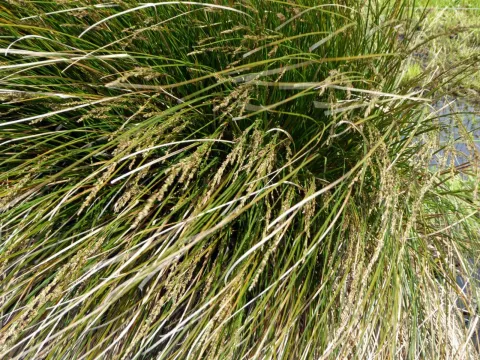
Carex secta, commonly known as Pūkio in Māori, is a perennial sedge belonging to the Cyperaceae family. This species is famous for its distinct, massive tussock growth form, which can grow on a trunk-like base formed by its own entangled root system, lifting it well above the ground level.
Native to New Zealand, this plant is well-adapted to a wide range of wetland environments. It is naturally found in swamps, bogs, and along the banks of rivers and lakes, thriving in areas where soil saturation is high and water levels can fluctuate significantly.
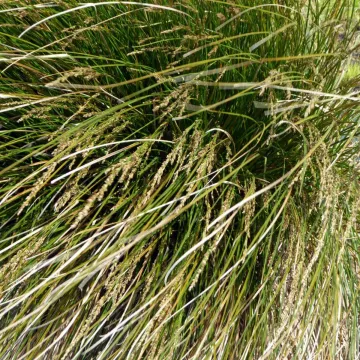
Botanically, Carex secta features long, narrow, arching leaves that often display shades of green or brownish-gold. Its inflorescences are pendulous, slender spikes that emerge on thin stalks, creating a graceful appearance. The plant's ability to create dense clumps makes it highly effective for stabilizing soil in riparian zones.
Regarding cultivation, the plant requires consistent moisture and performs best in fertile, damp soils. While it prefers full sun, it can adapt to partial shade. Irrigation management is the most important factor in its maintenance, as the root zone must remain hydrated throughout the growing season to ensure vigorous development.
In terms of economic and practical use, Carex secta is extensively used in ecological restoration, erosion control along riverbanks, and landscaping, especially for creating wildlife habitats in water gardens. It serves as a natural filter for water bodies, reducing sedimentation and enhancing local biodiversity.
- Excellent choice for riparian zone rehabilitation.
- High tolerance for periodic flooding and waterlogging.
- Low maintenance requirements once established in suitable sites.
Photo gallery