Spiked sedge
Carex spicata
Description
Spiked sedge (Carex spicata) is a perennial herbaceous plant belonging to the Cyperaceae family. In agricultural and environmental contexts, it is recognized as a resilient species that plays a significant role in stabilizing wet soils and enhancing the structural integrity of natural grassland ecosystems.
Originating from Europe and parts of Western Asia, this species has successfully naturalized in various temperate regions globally. It thrives in diverse habitats, ranging from damp meadows and forest edges to disturbed lands, demonstrating remarkable ecological plasticity and the ability to withstand varying moisture levels.
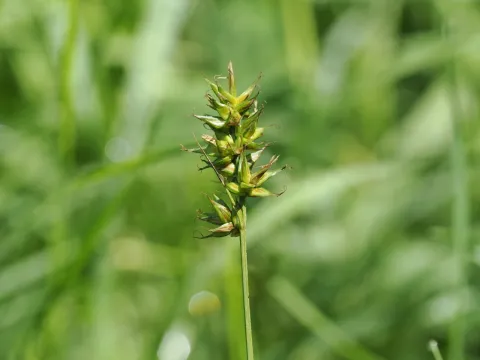
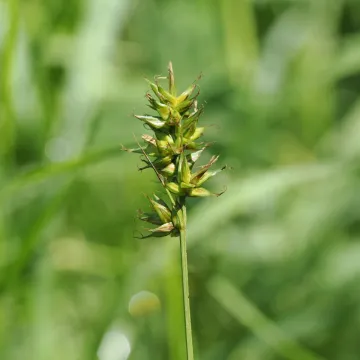
Botanically, Carex spicata is characterized by its dense, tufted growth habit and slender, erect stems that typically reach 30 to 60 centimeters in height. The leaves are narrow, dark green, and somewhat rigid, providing a durable texture. Its distinctive inflorescence consists of a spike-like arrangement, which is a hallmark feature of its morphology.
The agronomic requirements for this species are relatively low, as it is adapted to survive in various soil types, provided there is adequate moisture. It performs best in fertile, loamy soils but can tolerate transient flooding. Management practices primarily focus on managing plant competition and ensuring that soil aeration is maintained to prevent root-related issues.
In terms of agricultural use, the spiked sedge is highly valued for phytoremediation and erosion control on embankments or marginal lands. While it is not a primary fodder crop, it serves as a secondary source of forage in diverse pastures. Disease management involves maintaining a healthy ecosystem balance, as excessive fungal pressure can occur if the site is poorly drained.
Photo gallery