San Diego sedge
Carex spissa
Description
San Diego sedge, scientifically known as Carex spissa, belongs to the Cyperaceae family. It is a robust, perennial, clumping sedge that is widely recognized for its architectural form and structural integrity. In an agronomic context, it serves as a specialized plant for ecological restoration and ornamental gardening.
The plant is native to the southwestern United States, primarily found in California. Its natural habitat includes stream banks, moist canyons, and areas with high water tables. Because of its origin, the plant is well-adapted to Mediterranean climates where seasonal moisture is available, but it also demonstrates significant durability in managed environments.
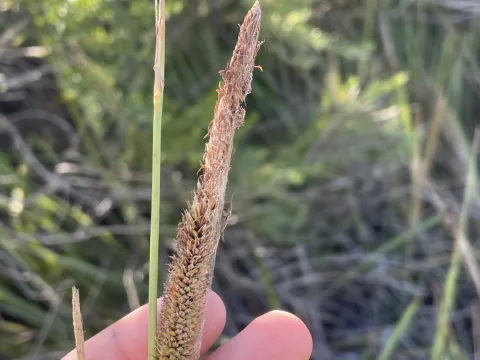
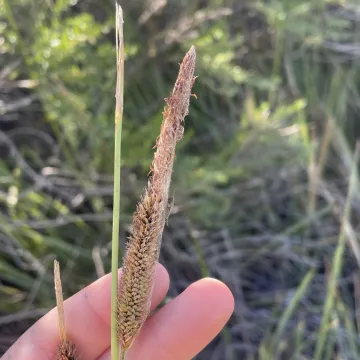
Botanically, Carex spissa produces stiff, grey-green leaves that form dense, upright clumps up to 1.5 meters tall. The inflorescences are dense, spike-like panicles that appear in the spring and summer months. The rigid texture of the foliage makes it highly resistant to physical damage and extreme weather conditions.
The cultivation requirements are centered on moisture management. This species thrives in moist to wet, well-draining soils but is surprisingly adaptable to various soil types once established. Standard agrotechnical practices include moderate fertilization and an annual cutback of the foliage in early spring to encourage fresh, healthy growth for the upcoming season.
The primary agricultural and horticultural uses for San Diego sedge include erosion control on slopes and the stabilization of stream banks. It is also an excellent choice for bioswales and water-wise gardening. While generally resilient, the plant can occasionally suffer from fungal leaf spots if airflow is poor, and pests like aphids should be monitored during the rapid growth phase.
Photo gallery