Three-nerved sedge
Carex trinervis
Description
Three-nerved sedge (Carex trinervis) is a perennial herbaceous plant belonging to the Cyperaceae family. In agricultural and environmental practice, it is recognized for its high tolerance to waterlogged conditions, making it an essential species for maintaining biodiversity and biomass production in wetland ecosystems and riparian zones where standard agricultural crops would fail.
The native distribution of this species spans the temperate regions of Eurasia. It naturally thrives in marshes, fens, and damp meadows. Its evolutionary adaptation allows it to flourish in soils that are consistently saturated with water, playing a vital role in natural soil stabilization and the filtration of nutrients in flood-prone landscape areas.
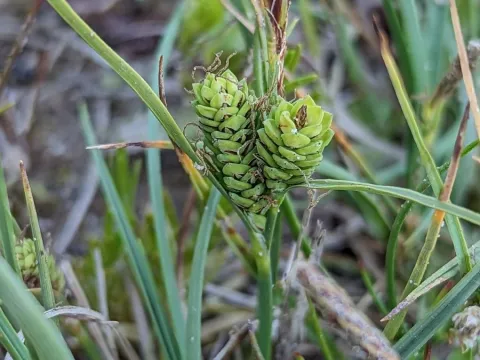
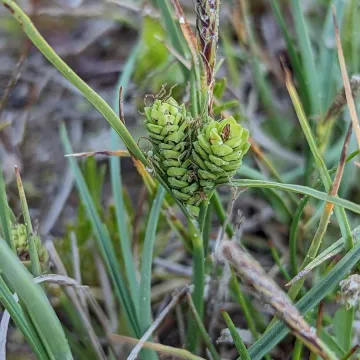
Botanically, Carex trinervis is characterized by robust, creeping rhizomes that facilitate rapid clonal spread. The foliage is tough and fibrous, marked by three distinct nerves (veins) on the leaf blades, which provide structural rigidity. The culms are triangular in cross-section, and the inflorescence consists of compact spikes optimized for wind pollination, ensuring reproductive success even in dense vegetation.
Cultivation requirements for this species are focused on maintaining specific moisture regimes. The plant performs best in organic-rich, acidic, or neutral marshy soils. Effective agronomy for this crop requires a balanced approach to water management: while it thrives in wet conditions, preventing prolonged stagnant water in the root zone during the establishment phase is essential for promoting deep root development.
The agricultural and environmental applications of this crop include the following:
- Utilization in forage production systems on marginal, waterlogged lands.
- Implementation in phytoremediation and soil stabilization projects.
- Restoration of degraded wetland habitats for ecological stability.
Common health issues include fungal infections such as leaf rust and various smuts, which can be problematic during high-humidity seasons. Pests, including specialized dipteran larvae, may affect the vegetative growth. To maintain crop health, regular monitoring and strategic mowing are recommended, which also help in rejuvenation of the stand and reducing the impact of potential pathogens.
Photo gallery