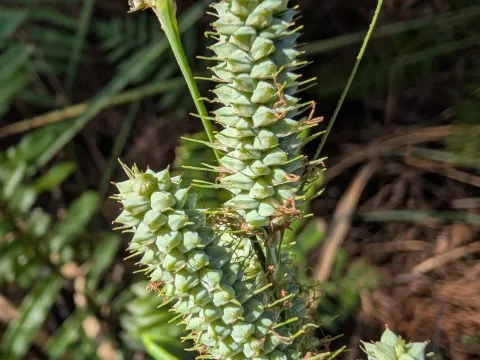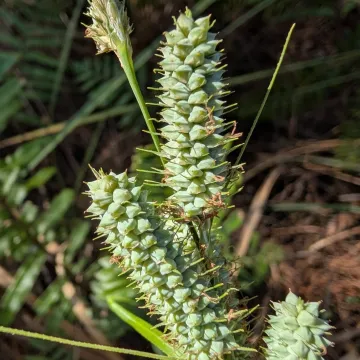
Warty Sedge
Carex verrucosa
Description
Carex verrucosa, commonly known as Warty Sedge, is a robust perennial grass-like plant belonging to the Cyperaceae family. It is recognized for its unique morphological features and its ability to thrive in demanding, moisture-rich environments that are often unsuitable for conventional crops.
Native primarily to North America, this species occupies a range of habitats including moist savannas, wetlands, and riparian zones. Its distribution is heavily dictated by soil moisture availability, making it a key indicator species for wetland health in its native temperate and subtropical regions.
Botanically, it is characterized by its stiff, triangular stems and narrow leaves. The name "verrucosa" refers to the small, warty, or rough textures found on its leaves and sometimes on the perigynia. The root system is fibrous and dense, which provides exceptional soil stabilization, making it effective for preventing coastal or bank erosion.
Agronomic requirements center on maintaining consistent soil moisture. While it prefers heavy, nutrient-rich soils, it can adapt to various soil types if kept constantly damp. Unlike many agricultural crops, it does not require significant fertilization, though organic matter enrichment can promote faster vegetative spread during the early establishment phase.
Economically, its primary value lies in environmental restoration and landscape architecture. It is widely used in bio-swales, rain gardens, and wetland reconstruction projects. The plant shows high resistance to common fungal pathogens and pests, provided that the drainage does not become entirely anaerobic, which is a major advantage for low-maintenance horticultural designs.
Photo gallery