Patana oak
Careya arborea
Description
Careya arborea, commonly known as Patana oak or Ceylon oak, is a deciduous tree belonging to the family Lecythidaceae. It is a robust species characterized by a sturdy trunk with thick, fire-resistant bark. This tree is highly valued in its native tropical environments for its adaptability and significant ecological role in sustaining local biodiversity.
The tree is primarily native to the tropical regions of India, Sri Lanka, and Southeast Asia. It thrives in diverse environments, ranging from dense monsoon forests to open, dry plains. Due to its hardiness, it has become an essential species in agroforestry systems, where it is utilized for both timber production and soil conservation purposes in its natural range.
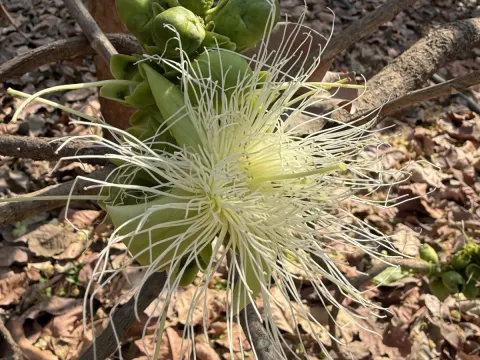
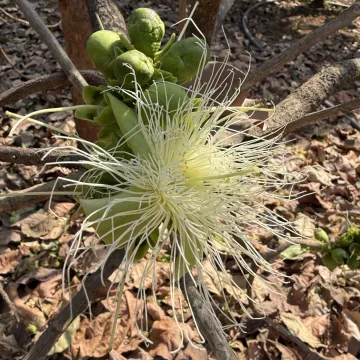
Botanically, Careya arborea is recognized for its large, leathery leaves that often turn vibrant shades of red before falling. The flowers are quite distinct, featuring numerous long, white stamens that create a brush-like appearance. The fruits are fleshy, globose berries that house several seeds, which are primarily dispersed by animals that consume the fruit pulp.
When cultivating this species, site selection is crucial. It prefers deep, fertile, and well-drained soils, though it shows remarkable tolerance to a wide range of soil pH levels. Agronomic care involves regular weeding during the establishment phase and ensuring adequate moisture in the early years. Once mature, the tree becomes highly drought-tolerant and requires minimal maintenance.
The economic utility of the Patana oak spans multiple sectors. Its wood is highly prized for its durability, making it suitable for tool handles, agricultural implements, and house construction. Furthermore, every part of the tree holds value; the leaves are used as fodder, the bark yields a strong fiber for ropes, and the seeds and flowers are frequently used in traditional medicine to treat various ailments.
- Natural resistance to common tropical pests.
- Valuable source of medicinal compounds.
- High-quality timber for construction.
- Adaptability to varied environmental conditions.
Photo gallery